Breaking News
ताज़ा खबर
Firefly Lander Data Challenges Decades-Old Moon Temperature Theory
फायरफ्लाई लैंडर डेटा ने दशकों पुरानी चंद्रमा के तापमान की धारणा को चुनौती दी
By AI News Desk
🕐 09 April 2026, 12:10 AM
🕐 09 April 2026, 00:10
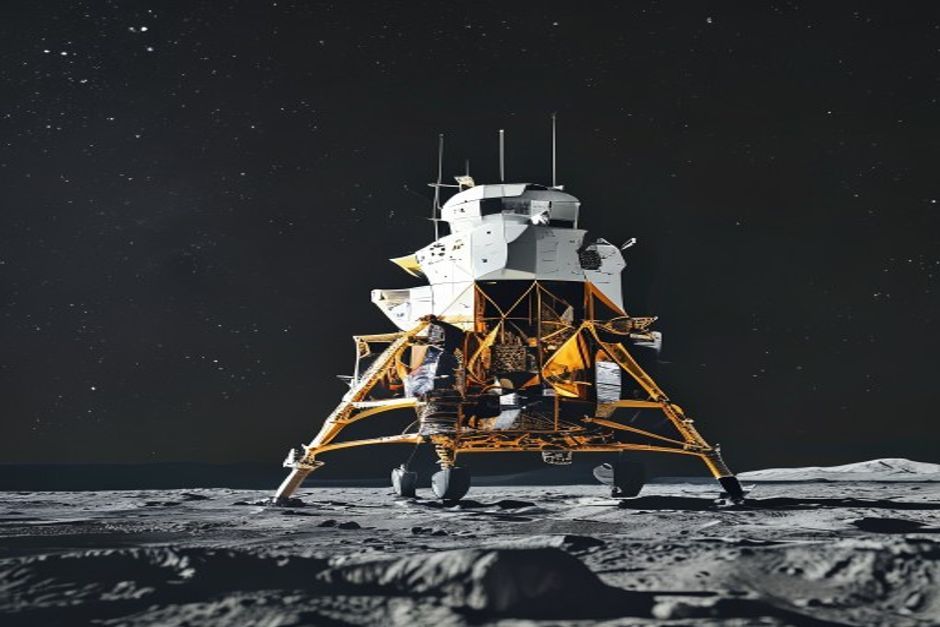
For decades, scientists have largely held a consistent view of our moon's thermal geography: a hotter near side, often scarred by volcanic activity and dark maria, contrasting sharply with a cooler, more ancient far side. This long-standing dichotomy has been a cornerstone in understanding lunar formation and evolution. However, new data from Firefly Aerospace's Blue Ghost lunar lander is now casting significant doubt on this established scientific consensus, potentially revolutionizing our understanding of Earth's closest celestial neighbor.
Rethinking Lunar Thermal Dynamics
The Blue Ghost mission, part of NASA's Commercial Lunar Payload Services (CLPS) initiative, successfully landed on the moon's surface and began collecting vital scientific data. Among its primary objectives was to analyze the lunar environment, including its thermal properties. The initial findings from the lander's instruments suggest that the temperature distribution across the moon's surface might not be as straightforwardly divided as previously thought. While specific details of the data are still being processed and peer-reviewed, the implications are already profound: the moon's near side might not be uniformly hotter, nor its far side uniformly cooler, challenging a narrative that has persisted since the Apollo era.
Why the Near Side Was Thought Hotter
The traditional theory posited that the near side of the moon experienced more intense volcanic activity due to a thinner crust and higher concentrations of heat-producing radioactive elements like thorium. This led to the formation of the vast, dark basaltic plains known as maria, which absorb more sunlight and retain heat. The far side, in contrast, has a thicker crust, fewer maria, and a higher density of impact craters, leading to the assumption of a cooler, more primordial surface. This geological asymmetry has been attributed to various factors, including Earth's tidal forces during the moon's early formation.
The Blue Ghost's Revelation
While Firefly Aerospace has yet to release a detailed scientific paper on its findings, the preliminary announcement points to readings that do not entirely align with the simple hot-near-side/cool-far-side model. This could mean that internal heat distribution mechanisms are more complex, or that surface features play a different role in temperature regulation than understood. The lander's instruments provide localized, high-resolution thermal data, offering a level of detail previously unavailable from orbital missions or theoretical models. Such ground-truth data is invaluable for refining our understanding of lunar thermophysics.
Implications for Future Lunar Exploration
If the moon's thermal dynamics are indeed more complex and less dichotomous, it has significant implications for future lunar missions, especially those aiming for long-term human presence. Understanding the true temperature variations is crucial for designing habitats, selecting optimal landing sites for resource extraction (like water ice), and planning for robotic and human traverses. It could also force a reevaluation of the moon's geological history, potentially leading to new theories about its formation and evolution. The data from Firefly's Blue Ghost is not just an intriguing scientific anomaly; it's a potential paradigm shift that underscores the enduring mysteries still awaiting discovery on our lunar neighbor.
दशकों से, वैज्ञानिकों ने हमारे चंद्रमा के थर्मल भूगोल के बारे में काफी हद तक एक सुसंगत दृष्टिकोण रखा है: एक गर्म निकटवर्ती हिस्सा, जो अक्सर ज्वालामुखीय गतिविधि और गहरे मारिया द्वारा क्षतिग्रस्त होता है, जो एक ठंडे, अधिक प्राचीन दूरवर्ती हिस्से के साथ तेजी से विरोधाभासी है। यह लंबे समय से चली आ रही द्वंद्वता चंद्र निर्माण और विकास को समझने में एक आधारशिला रही है। हालांकि, फायरफ्लाई एयरोस्पेस के ब्लू घोस्ट चंद्र लैंडर से नया डेटा अब इस स्थापित वैज्ञानिक सहमति पर महत्वपूर्ण संदेह पैदा कर रहा है, जिससे पृथ्वी के निकटतम खगोलीय पड़ोसी के बारे में हमारी समझ में क्रांति आ सकती है।
चंद्रमा के थर्मल डायनामिक्स पर पुनर्विचार
नासा के कमर्शियल लूनर पेलोड सर्विसेज (सीएलपीएस) पहल का हिस्सा, ब्लू घोस्ट मिशन सफलतापूर्वक चंद्रमा की सतह पर उतरा और महत्वपूर्ण वैज्ञानिक डेटा एकत्र करना शुरू किया। इसके प्राथमिक उद्देश्यों में से एक चंद्र पर्यावरण का विश्लेषण करना था, जिसमें इसके थर्मल गुण भी शामिल थे। लैंडर के उपकरणों से प्राप्त प्रारंभिक निष्कर्ष बताते हैं कि चंद्रमा की सतह पर तापमान का वितरण उतना सीधा विभाजित नहीं हो सकता है जितना पहले सोचा गया था। जबकि डेटा के विशिष्ट विवरणों को अभी भी संसाधित और सहकर्मी-समीक्षा किया जा रहा है, निहितार्थ पहले से ही गहरे हैं: चंद्रमा का निकटवर्ती हिस्सा समान रूप से गर्म नहीं हो सकता है, न ही इसका दूरवर्ती हिस्सा समान रूप से ठंडा हो सकता है, जो अपोलो युग से चली आ रही एक कथा को चुनौती देता है।
निकटवर्ती हिस्से को गर्म क्यों माना गया
पारंपरिक सिद्धांत ने यह माना था कि चंद्रमा के निकटवर्ती हिस्से में पतली पपड़ी और थोरियम जैसे गर्मी पैदा करने वाले रेडियोधर्मी तत्वों की उच्च सांद्रता के कारण अधिक तीव्र ज्वालामुखीय गतिविधि का अनुभव हुआ। इससे मारिया के रूप में ज्ञात विशाल, गहरे बेसाल्टिक मैदानों का निर्माण हुआ, जो अधिक सूर्य के प्रकाश को अवशोषित करते हैं और गर्मी को बनाए रखते हैं। इसके विपरीत, दूरवर्ती हिस्से में एक मोटी पपड़ी, कम मारिया और प्रभाव क्रेटरों का उच्च घनत्व है, जिससे एक ठंडी, अधिक प्राचीन सतह की धारणा बनी। इस भूवैज्ञानिक विषमता को चंद्रमा के प्रारंभिक निर्माण के दौरान पृथ्वी के ज्वारीय बलों सहित विभिन्न कारकों के लिए जिम्मेदार ठहराया गया है।
ब्लू घोस्ट का रहस्योद्घाटन
हालांकि फायरफ्लाई एयरोस्पेस ने अभी तक अपने निष्कर्षों पर एक विस्तृत वैज्ञानिक पत्र जारी नहीं किया है, प्रारंभिक घोषणा ऐसे रीडिंग की ओर इशारा करती है जो सरल गर्म-निकटवर्ती-ठंडा-दूरवर्ती मॉडल के साथ पूरी तरह से संरेखित नहीं होते हैं। इसका मतलब यह हो सकता है कि आंतरिक गर्मी वितरण तंत्र अधिक जटिल हैं, या सतह की विशेषताएं तापमान विनियमन में समझे गए से भिन्न भूमिका निभाती हैं। लैंडर के उपकरण स्थानीयकृत, उच्च-रिज़ॉल्यूशन थर्मल डेटा प्रदान करते हैं, जो पहले कक्षीय मिशनों या सैद्धांतिक मॉडलों से अनुपलब्ध विवरण का स्तर प्रदान करते हैं। इस तरह का जमीनी-सत्य डेटा चंद्र थर्मोफिजिक्स के बारे में हमारी समझ को परिष्कृत करने के लिए अमूल्य है।
भविष्य के चंद्र अन्वेषण के लिए निहितार्थ
यदि चंद्रमा के थर्मल डायनामिक्स वास्तव में अधिक जटिल और कम द्वंद्ववादी हैं, तो इसके भविष्य के चंद्र मिशनों के लिए महत्वपूर्ण निहितार्थ हैं, विशेष रूप से उन लोगों के लिए जो दीर्घकालिक मानव उपस्थिति का लक्ष्य रखते हैं। सही तापमान विविधताओं को समझना आवासों को डिजाइन करने, संसाधन निष्कर्षण (जैसे पानी की बर्फ) के लिए इष्टतम लैंडिंग साइटों का चयन करने और रोबोटिक और मानव यात्राओं की योजना बनाने के लिए महत्वपूर्ण है। यह चंद्रमा के भूवैज्ञानिक इतिहास का पुनर्मूल्यांकन करने के लिए भी मजबूर कर सकता है, जिससे इसके निर्माण और विकास के बारे में नए सिद्धांत सामने आ सकते हैं। फायरफ्लाई के ब्लू घोस्ट का डेटा सिर्फ एक दिलचस्प वैज्ञानिक विसंगति नहीं है; यह एक संभावित प्रतिमान बदलाव है जो हमारे चंद्र पड़ोसी पर अभी भी खोजे जाने वाले स्थायी रहस्यों को रेखांकित करता है।
