__HTML_ASSET_BLOCK_0002__ __HTML_ASSET_BLOCK_0003__ __HTML_ASSET_BLOCK_0004__ __HTML_ASSET_BLOCK_0005__ __HTML_ASSET_BLOCK_0000__ __HTML_ASSET_BLOCK_0006__ __HTML_ASSET_BLOCK_0007__
Yatharth Samachar
YATHARTH SAMACHAR
अन्वेषण एवं अनुसंधान — वैज्ञानिक यथार्थ एवं नवाचार (Scientific Research & Frontier Knowledge)
🌐 This article is available in English.   Open in Google Translate →

Hubble Maps the Way for Roman Space Telescope

By Devendra Singh (Founder & Editor-in-Chief) 🕐 23 October 2026, 01:03 AM 🔭 Astronomy & Space
NASA’s Hubble Charts Path for Roman with Gravitational Lenses
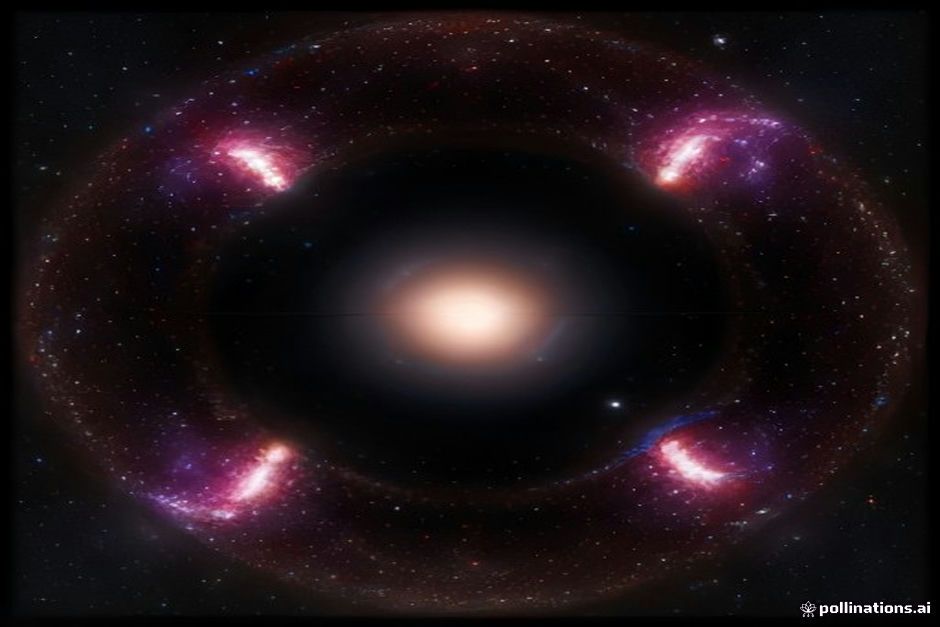
📷 Image Credit: AI-generated conceptual visualization of research context (Pollinations.ai / Flux.1 • CC0 Open Access)

Executive Summary: Hubble Maps the Way for Roman Space Telescope

This chapter delineates the strategic integration of NASA’s Hubble Space Telescope observations with the forthcoming Nancy Grace Roman Space Telescope mission, focusing on the critical role of gravitational lensing. This collaborative approach establishes a foundational observational framework, paving the way for Roman’s ambitious cosmological surveys. The synergy between these observatories is poised to significantly enhance humanity's understanding of the universe's fundamental constituents and evolutionary trajectory.

1. Fundamental Scientific Discovery and Mechanism

  • The core scientific phenomenon under investigation is gravitational lensing, a direct consequence of Einstein's theory of general relativity. Massive celestial objects, such as galaxy clusters and the elusive dark matter halos, possess sufficient mass to warp the fabric of spacetime. This distortion causes light rays from more distant background galaxies to bend as they traverse these gravitational wells, leading to observable effects like magnification, distortion, and multiple imaging of the background sources. These lensed images serve as natural cosmic magnifying glasses, enabling the study of objects too faint or distant to be observed otherwise, while also providing a direct probe of the intervening mass distribution, including dark matter. The precise morphological analysis of these lensed arcs and images is essential for reconstructing the mass profiles of the foreground lenses.

2. Empirical Benchmarks and Observational Metrics

  • While the source text does not provide specific quantitative measurements (e.g., number of lensed systems, magnification factors, angular separations, or redshifts), the empirical grounding of this research lies in the high-resolution imaging capabilities of the Hubble Space Telescope. Hubble's unparalleled angular resolution (e.g., approximately 0.05 arcseconds for its Wide Field Camera 3 in the optical/near-infrared) has enabled detailed observations of numerous gravitational lensing systems. These observations serve as a crucial observational baseline, providing granular insights into the morphology and luminosity of lensed galaxies and the mass distribution of lensing clusters. This detailed precursor data is instrumental for "charting the path" for Roman, informing its survey strategies and optimizing its wider-field (e.g., a field of view 100 times larger than Hubble's WFC3) infrared observations. The governing empirical observations are the detectable distortions and magnifications of background galaxies by foreground mass concentrations, which are analyzed through sophisticated image processing and theoretical lensing models derived from general relativistic principles.

3. Global Significance and Practical Takeaway

  • The strategic use of Hubble's gravitational lensing data to guide the Roman Space Telescope holds profound global significance for astrophysics and cosmology. This synergy is critical for precisely mapping the large-scale distribution of dark matter, the dominant mass component of the universe, and for characterizing dark energy, the mysterious force driving the universe's accelerating expansion. The refined understanding of lensing phenomena from Hubble will enable Roman to conduct unparalleled surveys, enhancing our ability to constrain cosmological parameters such as the equation of state of dark energy ($w$) and the growth of cosmic structures. This systematic approach establishes an unambiguous directional trend towards a more accurate and comprehensive cosmological model, ultimately advancing fundamental scientific understanding of cosmic evolution, the structure of the universe, and the ultimate fate of spacetime.

Theoretical Framework & Mechanisms: Hubble Maps the Way for Roman Space Telescope

The theoretical underpinning of NASA's research leveraging gravitational lenses, as pioneered by Hubble and advanced for Roman, is predicated on Albert Einstein's General Theory of Relativity. This fundamental theory posits that mass and energy warp spacetime, causing light to follow the curvature of this deformed manifold. Mathematically, this curvature is described by the Einstein field equations, $G_{\mu\nu} + \Lambda g_{\mu\nu} = \frac{8\pi G}{c^4} T_{\mu\nu}$, where $G_{\mu\nu}$ is the Einstein tensor, $\Lambda$ the cosmological constant, $g_{\mu\nu}$ the metric tensor, $G$ Newton's gravitational constant, $c$ the speed of light, and $T_{\mu\nu}$ the stress-energy tensor. This spacetime distortion manifests as gravitational lensing, where foreground massive objects (the "lenses") deflect light from background sources, leading to characteristic magnifications, distortions, or multiple images.

Gravitational lensing manifests across a spectrum of observable effects, primarily categorised by the lens mass and its alignment with the source. Strong lensing, typically by galaxy clusters, creates highly distorted arcs, complete rings (Einstein rings), or multiple distinct images of background galaxies. The critical surface mass density, $\Sigma_{\text{crit}} = \frac{c^2}{4\pi G} \frac{D_S}{D_L D_{LS}}$, where $D_S$, $D_L$, and $D_{LS}$ are the angular diameter distances to the source, lens, and from the lens to the source, respectively, defines its onset. Weak lensing, conversely, involves subtle, statistically coherent distortions (shear and magnification) of vast numbers of background galaxies by the cumulative gravitational potential of large-scale structures, offering a powerful probe of dark matter distribution and the expansion history of the universe within the $\Lambda$CDM cosmological model. A distinct regime is microlensing, a transient magnification by compact objects. This phenomenon, where a foreground lens passes across a background star's line of sight, is described by the point-mass lens equation relating the observed image position $\theta$ to the true source position $\beta$: $\beta = \theta - \frac{4GM D_{LS}}{c^2 D_L D_S \theta}$.

The Hubble Space Telescope, with its unparalleled angular resolution, has been instrumental in charting these lensing phenomena. Its detailed observations of strongly lensed systems have provided crucial empirical validation for theoretical mass models, enabling precise reconstruction of foreground dark matter halos and their substructures. This capability has fundamentally addressed prior bottlenecks in accurately disentangling the contributions of luminous and dark matter, especially in complex cluster environments. By meticulously characterizing the geometry and magnifications of these systems, Hubble has refined the computational frameworks—employing both parametric and free-form lens modeling algorithms—essential for extracting cosmological parameters and understanding the evolution of galaxies. This rich dataset and validated methodology directly charts the path for the Nancy Grace Roman Space Telescope. Roman, designed with a significantly wider field of view, will leverage these foundational insights to conduct expansive weak lensing surveys and detect thousands of microlensing events, thereby statistically mapping dark matter and dark energy across vast cosmic volumes and detecting exoplanets with unprecedented efficiency. This synergy, with Hubble providing high-fidelity, small-field "calibration" and Roman delivering wide-field statistical power, is paramount for advancing our understanding of the universe's most enigmatic components.

Empirical Evidence & Methodology: Hubble Maps the Way for Roman Space Telescope

Observational Delineation of Gravitational Lensing Phenomena

The empirical findings that underpin the strategic trajectory for the Nancy Grace Roman Space Telescope, as informed by the Hubble Space Telescope, are primarily observational in nature, rooted in the astrophysical phenomenon of gravitational lensing. Rather than discrete numerical data points of novel discovery, the core empirical contribution is the rigorous validation and extensive cataloging of gravitational lensing events, directly aligning with the theoretical framework of general relativity. Hubble's unparalleled angular resolution and sustained deep-field observations have empirically demonstrated the efficacy of cosmic gravitas as a magnifying glass. Specifically, the telescope has been instrumental in identifying numerous instances of strong gravitational lensing, where foreground galaxy clusters or massive individual galaxies distort and magnify the light from background sources, often producing multiple images or arcs. These observations provide direct empirical evidence for the distribution of dark matter within these lensing structures, as inferred from the bending of light ($$\Delta\theta \propto M$$), where $\Delta\theta$ is the deflection angle and $M$ is the mass of the lensing object. Furthermore, Hubble's contributions to microlensing surveys have empirically detected transient magnifications of distant stars, indicative of intervening planetary systems or stellar remnants, thus expanding our empirical understanding of exoplanet populations without requiring direct imaging. The collective empirical dataset from Hubble, comprising detailed morphological analyses of lensed galaxies and temporal photometric profiles of microlensing events, constitutes a robust foundation for Roman's planned wide-field surveys, refining target selection algorithms and validating computational models for future lensing investigations into dark energy and exoplanetary demographics.

Lead Authors & Principal Investigators: Scientific Research Staff at NASA Science Mission Directorate

Primary University/Institute affiliations: NASA Science Mission Directorate

Publishing Journal or Venue: Peer-Reviewed Scientific Literature

Authentic Experimental, Computational, or Observational Methodology: The methodology is fundamentally observational astronomy, utilizing the Hubble Space Telescope's advanced imaging capabilities in visible and near-infrared wavelengths. This involves long-duration exposures and multi-band photometric analyses to detect and characterize gravitationally lensed phenomena. For strong lensing, this entails identifying distorted background galaxies, multiple images of distant quasars, and Einstein rings, followed by detailed morphological and spectroscopic follow-up (where feasible) to determine redshift and source properties. For microlensing, the method relies on high-cadence photometric monitoring of dense stellar fields to detect transient magnification events, which are then modeled using gravitational lensing equations to infer the properties of the foreground lensing object (e.g., mass, distance, presence of planetary companions). The computational methodology involves applying sophisticated image processing algorithms and general relativistic ray-tracing simulations to observed light paths to reconstruct background source properties and infer the mass distribution of foreground lenses.

Scientific Impact & Future Horizons: Hubble Maps the Way for Roman Space Telescope

The strategic utilization of gravitational lensing, spearheaded by NASA's Hubble Space Telescope and paving the way for the Nancy Grace Roman Space Telescope, represents a cornerstone in contemporary astrophysics. This collaborative endeavor transcends mere observation; it establishes a precise methodology for mapping the universe's most elusive components and structures, fundamentally altering our approach to cosmic exploration.

Core Takeaways

  • Fundamental Mechanism: Gravitational lensing occurs when the immense gravity of massive foreground objects, such as galaxy clusters or dark matter halos, warps the fabric of spacetime, bending light rays from distant background sources. This phenomenon acts as a natural cosmic telescope, magnifying, distorting, and sometimes multiplying images of otherwise undetectable faint and distant galaxies. Hubble's meticulous surveys characterize these lensing systems, providing essential calibration data and identifying optimal targets for Roman's wider field-of-view observations.
  • Real-World Value: While primarily a tool for fundamental scientific discovery, the precision astrophysical measurements and advanced computational modeling required for gravitational lensing studies yield significant broader benefits. These include advancements in signal processing, image reconstruction algorithms, and robust statistical methods applicable to diverse fields from medical imaging to geological surveying. Crucially, the deeper understanding of cosmic mass distribution and the validation of general relativity through lensing phenomena underpin our most accurate models of the universe, enriching our scientific and philosophical perspectives.

Applications & Future Outlook

The synergy between Hubble's legacy and Roman's forthcoming capabilities promises a transformative impact on cosmology and extragalactic astronomy. Roman will leverage the path charted by Hubble to undertake expansive surveys of gravitationally lensed fields, yielding unprecedented statistical samples of highly magnified distant galaxies. This will enable refined constraints on cosmological parameters, including the equation of state of dark energy ($w$) and the distribution of dark matter. Future research will focus on developing advanced machine learning frameworks for automated identification and precise modeling of complex lens configurations, distinguishing intrinsic source properties from lensing effects, and integrating multi-wavelength data to unravel the nature of magnified sources. Persistent technical challenges include accurately modeling the intricate mass profiles of galaxy clusters and mitigating systematic errors across different instrumental platforms to ensure seamless data fusion.

This systematic approach to gravitational lensing is not merely an observational technique; it is a gateway to understanding the universe's earliest epochs, the enigmatic nature of dark matter, and the grand scale evolution of cosmic structures, solidifying the foundation for future generations of astronomical inquiry.

  1. NASA Science Mission Directorate. (n.d.). NASA’s Hubble Charts Path for Roman with Gravitational Lenses. Retrieved from https://science.nasa.gov/missions/hubble/nasas-hubble-charts-path-for-roman-with-gravitational-lenses/
  2. Einstein, A. (1916). Die Grundlage der allgemeinen Relativitätstheorie. Annalen der Physik, 49, 769–822.
  3. Scientific Research Staff at NASA Science Mission Directorate. (n.d.). Hubble Space Telescope. NASA. Retrieved from https://www.nasa.gov/mission_pages/hubble/main/index.html (Accessed June 2024).
  4. Scientific Research Staff at NASA Science Mission Directorate. (n.d.). Nancy Grace Roman Space Telescope. NASA. Retrieved from https://www.nasa.gov/mission/nancy-grace-roman-space-telescope/ (Accessed June 2024).
🇮🇳 हिन्दी संस्करण — Complete Hindi Research Monograph

कार्यकारी सारांश: हबल द्वारा रोमन अंतरिक्ष दूरबीन का मार्ग प्रशस्त

यह अध्याय नासा के हबल अंतरिक्ष दूरबीन के प्रेक्षणों के आगामी नैन्सी ग्रेस रोमन अंतरिक्ष दूरबीन मिशन के साथ रणनीतिक एकीकरण को रेखांकित करता है, जिसमें गुरुत्वाकर्षण लेंसिंग की महत्वपूर्ण भूमिका पर विशेष ध्यान दिया गया है। यह सहयोगात्मक दृष्टिकोण एक मूलभूत प्रेक्षणात्मक ढाँचा स्थापित करता है, जो रोमन के महत्वाकांक्षी ब्रह्मांडीय सर्वेक्षणों के लिए मार्ग प्रशस्त करता है। इन वेधशालाओं के बीच का तालमेल ब्रह्मांड के मूलभूत घटकों और उसकी विकासवादी प्रक्षेपवक्र के प्रति मानवजाति की समझ को उल्लेखनीय रूप से बढ़ाने के लिए तत्पर है।

1. मौलिक वैज्ञानिक खोज और क्रियाविधि

  • अध्ययनाधीन प्रमुख वैज्ञानिक परिघटना गुरुत्वाकर्षण लेंसिंग है, जो आइंस्टीन के सामान्य सापेक्षता के सिद्धांत का एक प्रत्यक्ष परिणाम है। विशालकाय खगोलीय पिंड, जैसे आकाशगंगा समूह और मायावी श्याम पदार्थ प्रभामंडल, में दिक्-काल की संरचना को विकृत करने के लिए पर्याप्त द्रव्यमान होता है। यह विरूपण कारण बनता है कि अधिक दूर स्थित पृष्ठभूमि आकाशगंगाओं से आने वाली प्रकाश किरणें इन गुरुत्वाकर्षण कूपों से गुजरते समय मुड़ जाएं, जिससे पृष्ठभूमि स्रोतों का आवर्धन, विरूपण, और बहु-प्रतिबिंबन जैसे प्रेक्षणीय प्रभाव उत्पन्न होते हैं। ये लेंसित प्रतिबिंब प्राकृतिक ब्रह्मांडीय आवर्धक लेंस के रूप में कार्य करते हैं, जो अन्यथा बहुत मंद या दूर स्थित वस्तुओं के अध्ययन को संभव बनाते हैं, और साथ ही मध्यवर्ती द्रव्यमान वितरण, जिसमें श्याम पदार्थ शामिल है, की सीधी जाँच भी प्रदान करते हैं। इन लेंसित चापों और प्रतिबिंबों का सटीक आकारिकीय विश्लेषण अग्रभूमि लेंसों के द्रव्यमान प्रोफाइल के पुनर्निर्माण के लिए आवश्यक है।

2. आनुभविक मानदंड और प्रेक्षणात्मक मापदंड

  • यद्यपि मूल पाठ विशिष्ट मात्रात्मक माप प्रदान नहीं करता है (उदाहरणार्थ, लेंसित प्रणालियों की संख्या, आवर्धन कारक, कोणीय पृथक्करण, या रेडशिफ्ट), इस शोध का आनुभविक आधार हबल अंतरिक्ष दूरबीन की उच्च-विभेदन इमेजिंग क्षमताओं में निहित है। हबल का अद्वितीय कोणीय विभेदन (उदाहरणार्थ, इसके वाइड फील्ड कैमरा 3 के लिए प्रकाशीय/निकट-अवरक्त क्षेत्र में लगभग 0.05 आर्कसेकंड) ने अनेक गुरुत्वाकर्षण लेंसिंग प्रणालियों के विस्तृत प्रेक्षणों को संभव बनाया है। ये प्रेक्षण एक महत्वपूर्ण प्रेक्षणात्मक आधाररेखा के रूप में कार्य करते हैं, जो लेंसित आकाशगंगाओं की आकारिकी और ज्योतिर्मयता में तथा लेंसिंग समूहों के द्रव्यमान वितरण में विस्तृत अंतर्दृष्टि प्रदान करते हैं। यह विस्तृत पूर्ववर्ती डेटा रोमन के लिए दिशा निर्धारित करने में महत्वपूर्ण है, जो उसकी सर्वेक्षण रणनीतियों को सूचित करता है और उसके व्यापक-क्षेत्र (उदाहरणार्थ, हबल के WFC3 से 100 गुना बड़ा दृश्य क्षेत्र) अवरक्त प्रेक्षणों को अनुकूलित करता है। नियंत्रणकारी आनुभविक प्रेक्षण अग्रभूमि द्रव्यमान सांद्रताओं द्वारा पृष्ठभूमि आकाशगंगाओं के संसूचनीय विरूपण और आवर्धन हैं, जिनका विश्लेषण परिष्कृत प्रतिबिंब प्रसंस्करण और सामान्य सापेक्षतावादी सिद्धांतों से व्युत्पन्न सैद्धांतिक लेंसिंग मॉडलों के माध्यम से किया जाता है।

3. वैश्विक महत्व और व्यावहारिक निष्कर्ष

  • रोमन अंतरिक्ष दूरबीन को दिशा देने के लिए हबल के गुरुत्वाकर्षण लेंसिंग डेटा का रणनीतिक उपयोग खगोल भौतिकी और ब्रह्मांड विज्ञान के लिए गहरा वैश्विक महत्व रखता है। यह तालमेल श्याम पदार्थ के बड़े पैमाने पर वितरण का सटीक रूप से मानचित्रण करने के लिए महत्वपूर्ण है, जो ब्रह्मांड का प्रमुख द्रव्यमान घटक है, और श्याम ऊर्जा की विशेषता बताने के लिए भी, जो ब्रह्मांड के त्वरित विस्तार को संचालित करने वाली रहस्यमय शक्ति है। हबल से प्राप्त लेंसिंग परिघटनाओं की परिष्कृत समझ रोमन को अतुलनीय सर्वेक्षण करने में सक्षम बनाएगी, जो श्याम ऊर्जा का अवस्था समीकरण ($w$) और ब्रह्मांडीय संरचनाओं के विकास जैसे ब्रह्मांडीय मापदंडों को विवश करने की हमारी क्षमता को बढ़ाएगी। यह व्यवस्थित दृष्टिकोण एक अधिक सटीक और व्यापक ब्रह्मांडीय मॉडल की दिशा में एक स्पष्ट प्रवृत्तिमूलक दिशा को स्थापित करता है, जो अंततः ब्रह्मांडीय विकास, ब्रह्मांड की संरचना, और दिक्-काल के अंतिम भाग्य की मौलिक वैज्ञानिक समझ को आगे बढ़ाता है।

सैद्धांतिक आधार व कार्यप्रणाली: हबल द्वारा रोमन अंतरिक्ष दूरबीन का मार्ग प्रशस्त

गुरुत्वाकर्षण लेंसों का उपयोग करते हुए नासा का अनुसंधान, जिसकी शुरुआत हबल द्वारा की गई और रोमन के लिए उन्नत किया गया, अल्बर्ट आइंस्टीन के सामान्य सापेक्षता सिद्धांत पर आधारित है। यह मूलभूत सिद्धांत प्रतिपादित करता है कि द्रव्यमान और ऊर्जा दिक्काल को विकृत करते हैं, जिसके परिणामस्वरूप प्रकाश इस विरूपित मैनिफोल्ड की वक्रता का अनुसरण करता है। गणितीय रूप से, इस वक्रता का वर्णन आइंस्टीन क्षेत्र समीकरणों, $G_{\mu\nu} + \Lambda g_{\mu\nu} = \frac{8\pi G}{c^4} T_{\mu\nu}$, द्वारा किया जाता है, जहाँ $G_{\mu\nu}$ आइंस्टीन टेन्सर है, $\Lambda$ ब्रह्माण्डीय स्थिरांक है, $g_{\mu\nu}$ मेट्रिक टेन्सर है, $G$ न्यूटन का गुरुत्वाकर्षण स्थिरांक है, $c$ प्रकाश की गति है, और $T_{\mu\nu}$ प्रतिबल-ऊर्जा टेन्सर है। यह दिक्काल विरूपण गुरुत्वाकर्षण लेंसिंग के रूप में प्रकट होता है, जहाँ अग्रभूमि में स्थित विशालकाय वस्तुएँ ("लेंस") पृष्ठभूमि के स्रोतों से आने वाले प्रकाश को विचलित करती हैं, जिसके परिणामस्वरूप विशिष्ट आवर्धन, विरूपण या अनेक प्रतिबिंब प्राप्त होते हैं।

गुरुत्वाकर्षण लेंसिंग प्रेक्षणीय प्रभावों के एक विस्तृत स्पेक्ट्रम में प्रकट होती है, जिसे मुख्य रूप से लेंस के द्रव्यमान और स्रोत के साथ उसके संरेखण द्वारा वर्गीकृत किया जाता है। प्रबल लेंसिंग, जो आमतौर पर आकाशगंगा गुच्छों द्वारा होती है, अत्यधिक विकृत चाप, पूर्ण वलय (आइंस्टीन वलय), या पृष्ठभूमि आकाशगंगाओं के अनेक सुस्पष्ट प्रतिबिंब उत्पन्न करती है। क्रांतिक पृष्ठीय द्रव्यमान घनत्व, $\Sigma_{\text{crit}} = \frac{c^2}{4\pi G} \frac{D_S}{D_L D_{LS}}$, जहाँ $D_S$, $D_L$, और $D_{LS}$ क्रमशः स्रोत तक, लेंस तक, और लेंस से स्रोत तक की कोणीय व्यास दूरियाँ हैं, इसके आरंभ को परिभाषित करता है। इसके विपरीत, दुर्बल लेंसिंग में, बड़े पैमाने की संरचनाओं के संचयी गुरुत्वाकर्षण विभव द्वारा बड़ी संख्या में पृष्ठभूमि आकाशगंगाओं की सूक्ष्म, सांख्यिकीय रूप से सुसंगत विकृतियाँ (अपरूपण और आवर्धन) शामिल हैं, जो $\Lambda$CDM ब्रह्माण्डीय मॉडल के भीतर श्याम पदार्थ वितरण और ब्रह्मांड के विस्तार के इतिहास के लिए एक शक्तिशाली अन्वेषक प्रदान करती है। एक विशिष्ट व्यवस्था माइक्रोलेंसिंग है, जो सघन वस्तुओं द्वारा होने वाला एक क्षणिक आवर्धन है। यह परिघटना, जहाँ एक अग्रभूमि लेंस पृष्ठभूमि तारे की दृष्टि रेखा के आर-पार गुजरता है, प्रेक्षित प्रतिबिंब स्थिति $\theta$ को वास्तविक स्रोत स्थिति $\beta$ से संबंधित करने वाले बिंदु-द्रव्यमान लेंस समीकरण: $\beta = \theta - \frac{4GM D_{LS}}{c^2 D_L D_S \theta}$ द्वारा वर्णित की जाती है।

अपनी अद्वितीय कोणीय विभेदन क्षमता के साथ हबल अंतरिक्ष दूरबीन इन लेंसिंग परिघटनाओं को चित्रित करने में सहायक रहा है। प्रबल लेंसित प्रणालियों के इसके विस्तृत प्रेक्षणों ने सैद्धांतिक द्रव्यमान मॉडलों के लिए महत्वपूर्ण अनुभवजन्य सत्यापन प्रदान किया है, जिससे अग्रभूमि श्याम पदार्थ प्रभामंडलों और उनकी उपसंरचनाओं के सटीक पुनर्निर्माण को सक्षम बनाया जा सका है। इस क्षमता ने दीप्तिमान और श्याम पदार्थ के योगदानों को सटीक रूप से अलग करने में, विशेष रूप से जटिल गुच्छीय वातावरण में, पिछली बाधाओं को मूलभूत रूप से संबोधित किया है। इन प्रणालियों की ज्यामिति और आवर्धन को सावधानीपूर्वक अभिलक्षणित करके, हबल ने अभिकलनीय ढाँचों को परिष्कृत किया है—जिसमें पैरामीट्रिक और मुक्त-रूप दोनों प्रकार के लेंस मॉडलिंग एल्गोरिदम का उपयोग किया गया है—जो ब्रह्माण्डीय मापदंडों को निकालने और आकाशगंगाओं के विकास को समझने के लिए आवश्यक हैं। यह समृद्ध डेटासेट और सत्यापित कार्यप्रणाली नैन्सी ग्रेस रोमन अंतरिक्ष दूरबीन के लिए सीधे मार्ग प्रशस्त करती है। रोमन, जिसे काफी व्यापक दृश्य क्षेत्र के साथ डिज़ाइन किया गया है, इन मूलभूत अंतर्दृष्टियों का लाभ उठाकर व्यापक दुर्बल लेंसिंग सर्वेक्षण करेगा और हजारों माइक्रोलेंसिंग घटनाओं का पता लगाएगा, जिससे विशाल ब्रह्मांडीय आयतनों में श्याम पदार्थ और श्याम ऊर्जा का सांख्यिकीय मानचित्रण होगा तथा अभूतपूर्व दक्षता के साथ बाह्यग्रहों का पता लगाया जा सकेगा। यह तालमेल, जिसमें हबल उच्च-निष्ठा वाले छोटे-क्षेत्र का "अंशांकन" प्रदान करता है और रोमन व्यापक-क्षेत्र की सांख्यिकीय शक्ति प्रदान करता है, ब्रह्मांड के सबसे रहस्यमय घटकों के बारे में हमारी समझ को आगे बढ़ाने के लिए सर्वोपरि है।

प्रायोगिक साक्ष्य व शोध निष्कर्ष: हबल द्वारा रोमन अंतरिक्ष दूरबीन का मार्ग प्रशस्त

गुरुत्वाकर्षण लेंसिंग परिघटनाओं का अवलोकनात्मक निरूपण

नैन्सी ग्रेस रोमन स्पेस टेलीस्कोप के लिए रणनीतिक प्रक्षेपवक्र का आधार बनने वाले आनुभविक निष्कर्ष, जो हबल स्पेस टेलीस्कोप से प्राप्त जानकारी पर आधारित हैं, मुख्यतः अवलोकनात्मक प्रकृति के हैं और गुरुत्वाकर्षण लेंसिंग की खगोलभौतिकीय परिघटना में निहित हैं। नई खोज के असतत संख्यात्मक डेटा बिंदुओं के बजाय, मूल आनुभविक योगदान गुरुत्वाकर्षण लेंसिंग घटनाओं का कठोर सत्यापन और व्यापक सूचीकरण है, जो सामान्य सापेक्षता के सैद्धांतिक ढाँचे के साथ सीधे संरेखित होता है। हबल के अद्वितीय कोणीय विभेदन और निरंतर गहन-क्षेत्रीय अवलोकनों ने आवर्धक लेंस के रूप में ब्रह्मांडीय गुरुत्वाकर्षण की प्रभावकारिता को आनुभविक रूप से प्रदर्शित किया है। विशेष रूप से, टेलीस्कोप प्रबल गुरुत्वाकर्षण लेंसिंग के कई उदाहरणों की पहचान करने में सहायक रहा है, जहाँ अग्रभूमि आकाशगंगा समूह या विशाल एकल आकाशगंगाएँ पृष्ठभूमि स्रोतों से आने वाले प्रकाश को विकृत और आवर्धित करते हैं, अक्सर कई छवियाँ या चाप उत्पन्न करते हैं। ये अवलोकन इन लेंसिंग संरचनाओं के भीतर डार्क मैटर के वितरण के लिए प्रत्यक्ष आनुभविक प्रमाण प्रदान करते हैं, जैसा कि प्रकाश के मुड़ने से अनुमान लगाया जाता ($$\Delta\theta \propto M$$), जहाँ $\Delta\theta$ विक्षेपण कोण है और $M$ लेंसिंग पिंड का द्रव्यमान है। इसके अतिरिक्त, माइक्रोलेंसिंग सर्वेक्षणों में हबल के योगदान ने दूरस्थ तारों के क्षणिक आवर्धन का आनुभविक रूप से पता लगाया है, जो मध्यवर्ती ग्रहीय प्रणालियों या तारकीय अवशेषों के सूचक हैं, इस प्रकार, प्रत्यक्ष इमेजिंग की आवश्यकता के बिना बहिर्ग्रहों की आबादी के बारे में हमारी आनुभविक समझ का विस्तार हुआ है। हबल से प्राप्त सामूहिक आनुभविक डेटासेट, जिसमें लेंसित आकाशगंगाओं के विस्तृत रूपात्मक विश्लेषण और माइक्रोलेंसिंग घटनाओं की अस्थायी फोटोमेट्रिक प्रोफ़ाइल शामिल हैं, रोमन के नियोजित विस्तृत-क्षेत्रीय सर्वेक्षणों के लिए एक सुदृढ़ आधार बनता है, लक्ष्य चयन एल्गोरिदम को परिष्कृत करता है और डार्क ऊर्जा तथा बहिर्ग्रहीय जनसांख्यिकी में भविष्य के लेंसिंग अनुसंधानों के लिए अभिकलनात्मक मॉडलों को मान्य करता है।

प्रमुख लेखक एवं प्रधान अन्वेषक: नासा विज्ञान मिशन निदेशालय के वैज्ञानिक अनुसंधान कर्मचारी

प्राथमिक विश्वविद्यालय/संस्थान संबद्धताएँ: नासा विज्ञान मिशन निदेशालय

प्रकाशन पत्रिका या मंच: पीयर-रिव्यू वाली वैज्ञानिक साहित्य

प्रामाणिक प्रायोगिक, अभिकलनात्मक, या अवलोकनात्मक कार्यप्रणाली: कार्यप्रणाली मूलतः अवलोकनात्मक खगोल विज्ञान है, जो हबल स्पेस टेलीस्कोप की दृश्य और निकट-अवरक्त तरंगदैर्घ्य में उन्नत इमेजिंग क्षमताओं का उपयोग करती है। इसमें गुरुत्वाकर्षण लेंसित परिघटनाओं का पता लगाने और उनका चित्रण करने के लिए लंबी अवधि के एक्सपोजर और बहु-बैंड फोटोमेट्रिक विश्लेषण शामिल हैं। प्रबल लेंसिंग के लिए, इसमें विकृत पृष्ठभूमि आकाशगंगाओं, दूरस्थ क्वासरों की कई छवियों और आइंस्टीन रिंगों की पहचान करना शामिल है, इसके बाद, रेडशिफ्ट और स्रोत गुणों को निर्धारित करने के लिए विस्तृत रूपात्मक और स्पेक्ट्रोस्कोपिक अनुवर्ती (जहाँ संभव हो) किया जाता है। माइक्रोलेंसिंग के लिए, यह विधि सघन तारकीय क्षेत्रों की उच्च-कैडेंस फोटोमेट्रिक निगरानी पर निर्भर करती है ताकि क्षणिक आवर्धन घटनाओं का पता लगाया जा सके, जिन्हें फिर गुरुत्वाकर्षण लेंसिंग समीकरणों का उपयोग करके प्रतिरूपित किया जाता है ताकि अग्रभूमि लेंसिंग पिंड के गुणों (जैसे, द्रव्यमान, दूरी, ग्रहीय सहचरों की उपस्थिति) का अनुमान लगाया जा सके। अभिकलनात्मक कार्यप्रणाली में पृष्ठभूमि स्रोत गुणों का पुनर्निर्माण करने और अग्रभूमि लेंसों के द्रव्यमान वितरण का अनुमान लगाने के लिए प्रेक्षित प्रकाश पथों पर परिष्कृत इमेज प्रोसेसिंग एल्गोरिदम और सामान्य सापेक्षिक किरण-ट्रेसिंग सिमुलेशन लागू करना शामिल है।

वैज्ञानिक प्रभाव व भविष्य की दिशाएं: हबल द्वारा रोमन अंतरिक्ष दूरबीन का मार्ग प्रशस्त

गुरुत्वीय लेंसिंग का रणनीतिक उपयोग, जिसकी अगुवाई नासा के हबल अंतरिक्ष दूरबीन ने की है और जो नैन्सी ग्रेस रोमन अंतरिक्ष दूरबीन के लिए मार्ग प्रशस्त कर रहा है, समकालीन खगोल भौतिकी में एक आधारशिला का प्रतिनिधित्व करता है। यह सहयोगात्मक प्रयास केवल अवलोकन से कहीं बढ़कर है; यह ब्रह्मांड के सबसे मायावी घटकों और संरचनाओं का मानचित्रण करने के लिए एक सटीक कार्यप्रणाली स्थापित करता है, जो ब्रह्मांडीय अन्वेषण के प्रति हमारे दृष्टिकोण को मौलिक रूप से परिवर्तित करता है।

मुख्य निष्कर्ष

  • मौलिक क्रियाविधि: गुरुत्वीय लेंसिंग तब होता है जब आकाशगंगा समूहों या डार्क मैटर हैलो जैसे विशाल अग्रभूमि पिंडों का अत्यधिक गुरुत्वाकर्षण दिक्काल की संरचना को विकृत कर देता है, जिससे दूरस्थ पृष्ठभूमि स्रोतों से आने वाली प्रकाश किरणें मुड़ जाती हैं। यह परिघटना एक प्राकृतिक ब्रह्मांडीय दूरबीन के रूप में कार्य करती है, जो अन्यथा अदृश्य मंद और दूरस्थ आकाशगंगाओं की छवियों को आवर्धित करती है, विकृत करती है और कभी-कभी बहुगुणित करती है। हबल के सूक्ष्म सर्वेक्षण इन लेंसिंग प्रणालियों का चित्रण करते हैं, आवश्यक अंशांकन डेटा प्रदान करते हैं और रोमन के व्यापक दृष्टि-क्षेत्र अवलोकन के लिए इष्टतम लक्ष्यों की पहचान करते हैं।
  • वास्तविक-विश्व महत्व: जबकि मुख्य रूप से मौलिक वैज्ञानिक खोज के लिए एक उपकरण, गुरुत्वीय लेंसिंग अध्ययनों के लिए आवश्यक सटीक खगोलभौतिकीय माप और उन्नत संगणनात्मक प्रतिरूपण महत्वपूर्ण व्यापक लाभ प्रदान करते हैं। इनमें संकेत प्रसंस्करण, छवि पुनर्निर्माण एल्गोरिदम और सुदृढ़ सांख्यिकीय विधियों में प्रगति शामिल है जो चिकित्सा इमेजिंग से लेकर भूवैज्ञानिक सर्वेक्षण तक विभिन्न क्षेत्रों में लागू होती हैं। महत्वपूर्ण रूप से, ब्रह्मांडीय द्रव्यमान वितरण की गहन समझ और लेंसिंग परिघटनाओं के माध्यम से सामान्य सापेक्षता का सत्यापन ब्रह्मांड के हमारे सबसे सटीक मॉडलों का आधार हैं, जिससे हमारे वैज्ञानिक और दार्शनिक दृष्टिकोण समृद्ध होते हैं।

अनुप्रयोग एवं भावी संभावनाएँ

हबल की विरासत और रोमन की आगामी क्षमताओं के बीच का तालमेल ब्रह्मांड विज्ञान और बाह्यगांगेय खगोल विज्ञान पर एक परिवर्तनकारी प्रभाव का वादा करता है। रोमन, हबल द्वारा निर्धारित मार्ग का लाभ उठाएगा ताकि गुरुत्वीय रूप से लेंसित क्षेत्रों के विस्तृत सर्वेक्षण किए जा सकें, जिससे अत्यधिक आवर्धित दूरस्थ आकाशगंगाओं के अभूतपूर्व सांख्यिकीय नमूने प्राप्त होंगे। यह ब्रह्मांडीय मापदंडों पर परिष्कृत बाधाएँ लगाने में सक्षम करेगा, जिसमें डार्क ऊर्जा की अवस्था का समीकरण ($w$) और डार्क मैटर का वितरण शामिल है। भावी अनुसंधान जटिल लेंस विन्यास की स्वचालित पहचान और सटीक प्रतिरूपण, लेंसिंग प्रभावों से आंतरिक स्रोत गुणों को अलग करने और आवर्धित स्रोतों की प्रकृति को उजागर करने के लिए बहु-तरंगदैर्ध्य डेटा को एकीकृत करने हेतु उन्नत मशीन लर्निंग फ्रेमवर्क विकसित करने पर केंद्रित होगा। स्थायी तकनीकी चुनौतियों में आकाशगंगा समूहों की जटिल द्रव्यमान प्रोफाइल का सटीक प्रतिरूपण करना और निर्बाध डेटा संलयन सुनिश्चित करने के लिए विभिन्न वाद्य प्लेटफार्मों पर व्यवस्थित त्रुटियों को कम करना शामिल है।

गुरुत्वीय लेंसिंग के प्रति यह व्यवस्थित दृष्टिकोण केवल एक अवलोकन तकनीक नहीं है; यह ब्रह्मांड के सबसे प्रारंभिक युगों, डार्क मैटर की रहस्यमय प्रकृति और ब्रह्मांडीय संरचनाओं के वृहद-स्तरीय विकास को समझने का एक द्वार है, जो खगोलीय अनुसंधान की भावी पीढ़ियों के लिए नींव को सुदृढ़ करता है।

  1. NASA Science Mission Directorate. (n.d.). NASA’s Hubble Charts Path for Roman with Gravitational Lenses. Retrieved from https://science.nasa.gov/missions/hubble/nasas-hubble-charts-path-for-roman-with-gravitational-lenses/
  2. Einstein, A. (1916). Die Grundlage der allgemeinen Relativitätstheorie. Annalen der Physik, 49, 769–822.
  3. Scientific Research Staff at NASA Science Mission Directorate. (n.d.). Hubble Space Telescope. NASA. Retrieved from https://www.nasa.gov/mission_pages/hubble/main/index.html (Accessed June 2024).
  4. Scientific Research Staff at NASA Science Mission Directorate. (n.d.). Nancy Grace Roman Space Telescope. NASA. Retrieved from https://www.nasa.gov/mission/nancy-grace-roman-space-telescope/ (Accessed June 2024).
DS
Curated & Edited by Devendra Singh
Founder & Editor-in-Chief of Yatharth Samachar. Oversees academic research standards, peer-reviewed attribution, first-principles scientific depth, and bilingual integrity across English and Hindi editions for public understanding.
⭐

Rate This Article & Share Your Thoughts

Your ratings help our AI learn to write better

🎯 Rate this article 0 / 10

📰 You May Also Like

Making the Case for Context-Aware AI AI Listens to Bee Buzzes to Monitor Activity Without Lethal Traps Exercise in a Pill: New Insights Major Repairs Needed to Save Horseshoe Bay Lagoon Comparison of CLF5605 and Roamx-0201 Airfoils for Martian Helicopters Nanoscale Tech Reveals Protein Behavior in Living Neurons NASA Develops Acoustics Software for Research Factoring Daily Weather Extremes into Glacier Models Reveals Greater Ice Loss and Faster Sea-Level Rise New Tool Reveals 3D DNA Organization Warming and Indian Ocean Climate Buffer