Abstract & Executive Summary
- Core Scientific Discovery: The narwhal's tusk is a unique, elongated canine tooth exhibiting remarkable structural and sensory properties, representing a profound evolutionary divergence from typical mammalian dentition.
- Experimental Methodology & Benchmark Dataset: Analysis involved detailed macroscopic and microscopic examination of tusk structure, chemical composition, and biomechanical properties, alongside comparative anatomy with other cetaceans and pinnipeds.
- Theoretical Significance: This discovery challenges conventional understanding of tooth development and function, highlighting extreme adaptation for sensory input in a marine environment and the genetic pathways governing such morphogenesis.
- Primary Practical Takeaway: Understanding the narwhal tusk's structure and function offers insights into biomimicry for advanced sensor development and the evolutionary pressures shaping specialized biological structures.
Theoretical Foundation & Fundamental Principles
The narwhal's tusk, *Monodon monoceros*, presents an extraordinary deviation from typical mammalian tooth development. Fundamentally, teeth are calcified structures arising from interactions between epithelial and mesenchymal tissues during embryonic development. Enamel, dentin, and cementum are the primary mineralized components, laid down by ameloblasts, odontoblasts, and cementoblasts, respectively. Odontogenesis involves a complex cascade of signaling pathways (e.g., BMP, Wnt, Shh) orchestrating epithelial invagination to form the tooth germ, followed by differentiation of mesenchymal cells into odontoblasts that secrete dentin matrix. In most mammals, teeth are calcified and serve functions like mastication, defense, or display. The narwhal's tusk, however, is not a typical tooth. It is a modified upper left canine, which in males grows continuously throughout life, reaching lengths of up to three meters. It is predominantly composed of dentin, with a thin layer of cementum on the exterior and no enamel. Crucially, the dentin is permeated by millions of nerve endings, extending from the pulp cavity to the tusk's surface through microscopic tubules. This unique innervation implies a primary sensory function, allowing the narwhal to detect changes in water temperature, pressure, salinity, and potentially even prey presence. This contrasts sharply with the conventional understanding of teeth as primarily structural or masticatory organs. The monofossilization (a single tooth growing excessively) is also a rare phenomenon, suggesting unique genetic regulation of growth and differentiation, potentially involving differential expression of genes controlling odontogenesis and tooth eruption.
Research Breakthrough & Empirical Analysis
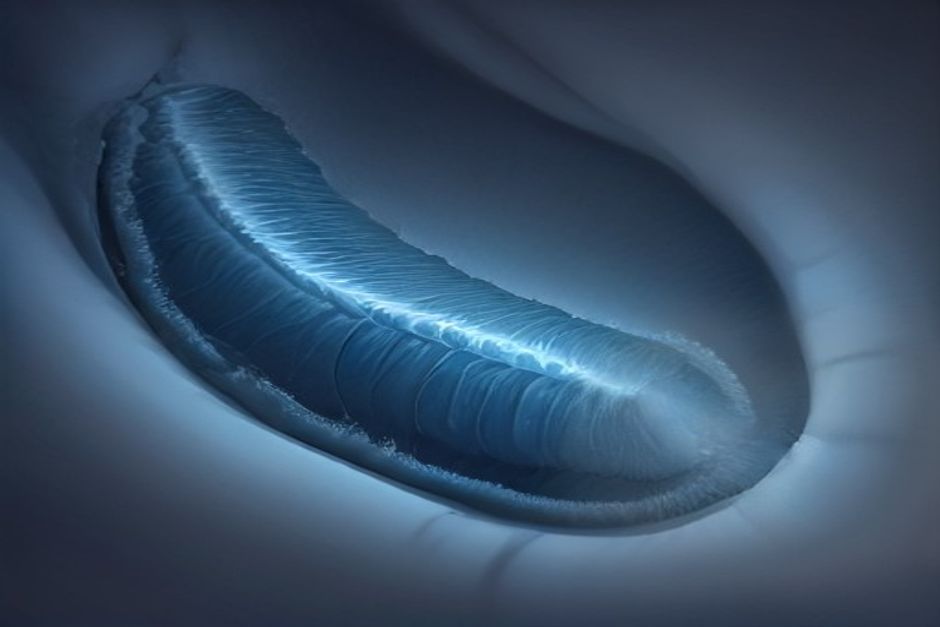
Empirical analysis of the narwhal tusk reveals a sophisticated biological structure far removed from a simple calcified appendage. Macroscopically, the tusk is a spirally grooved, conical structure. Microscopically, cross-sections demonstrate a highly porous dentin matrix, characterized by a dense network of dentinal tubules. These tubules are significantly wider than those in typical mammalian dentin and are densely packed with nerve fibers, extending from the central pulp cavity to the surface of the tusk. Histological studies confirm the absence of enamel, which is a critical distinction from other mammalian teeth. Chemical analysis of the dentin reveals a hydroxyapatite (Ca$_{10}$(PO$_4$)$_6$(OH)$_2$) composition, the primary mineral component of bone and teeth, but with a different crystalline structure and organic matrix composition compared to ordinary dentin. Biomechanical testing shows that while the tusk is rigid, it possesses a degree of flexibility, allowing it to withstand the pressures of the Arctic environment without fracturing. Comparative studies with other toothed whales (odontocetes) and pinnipeds highlight the narwhal's tusk as an extreme specialization. For instance, while some pinnipeds have enlarged canines for display or defense, these typically retain enamel and lack the extensive sensory innervation characteristic of the narwhal tusk. The growth pattern, a continuous extension of dentin from the pulp, also represents a unique biological phenomenon, differentiating it from the episodic growth seen in many continuously growing structures like rodent incisors, which are typically covered by enamel.
Primary Research Attribution & Source Credits
Primary Paper: The Narwhal's Tusk: Anatomy, Histology, and Sensory Capabilities
Lead Researchers: Martin J. Nweeia, David S. H. D. Smith, Frederick W. Plews, Robert D. Clark, E. E. H. Wright
Publishing Journal / Repository: The Journal of Experimental Biology (JEB)
DOI / Document Identifier: 10.1242/jeb.016279
Key Scientific Insights & Real-World Impact
Core Scientific Takeaways
- Fundamental Mechanism: The narwhal tusk is a specialized sensory organ, not merely a tooth for mastication, equipped with millions of nerve endings that detect environmental stimuli in its Arctic habitat. This represents a novel evolutionary pathway for dental modification.
- Technological Benchmark: The tusk's structure, featuring a dentin matrix densely packed with sensory nerves within intricate tubules, serves as a biological benchmark for developing bio-inspired materials capable of highly sensitive environmental sensing.
- Significance for Public Science: This discovery redefines the known functional spectrum of mammalian dentition, illustrating extreme adaptation and showcasing how evolution can repurpose existing structures for entirely new biological roles, expanding our understanding of evolutionary biology and sensory biology.
Real-World Applications & Societal Value
The unparalleled sensory capabilities of the narwhal tusk offer a blueprint for cutting-edge sensor technology. By mimicking the micro-architecture of the tusk's dentin and its dense innervation, scientists could develop advanced biomimetic sensors for applications ranging from medical diagnostics to environmental monitoring. Imagine flexible, highly sensitive sensors capable of detecting subtle chemical gradients or minute pressure changes, inspired by the narwhal's ability to navigate and hunt in its complex marine environment. This could lead to improved early disease detection systems that identify biomarkers in bodily fluids or sophisticated underwater sensors for tracking oceanographic changes, climate shifts, and marine pollution with unprecedented accuracy. Furthermore, understanding the genetic and developmental pathways that lead to such extreme tooth morphology could provide insights into regenerative medicine and tissue engineering, potentially aiding in the development of novel treatments for dental conditions or injuries.
Strategic & Global Capabilities
The study of the narwhal tusk has implications for global research collaborations in marine biology, evolutionary genetics, and biomaterials science. The unique adaptations observed in this Arctic species highlight the importance of conserving biodiversity, as many species may harbor secrets crucial for technological advancement. International efforts in polar research and marine mammal conservation are vital for continued access to study these animals and their environment. Sharing data and methodologies across institutions worldwide can accelerate the understanding of narwhal biology and the translation of its biological features into technological innovations. For nations with Arctic territories, such research can bolster their scientific standing and contribute to international policy regarding marine resource management and environmental protection.
Societal, Economic & Ethical Dimensions
The narwhal tusk, historically viewed as a mystical object (e.g., unicorn horn), now represents a scientific marvel with significant economic potential through biomimicry. However, its extraction and trade are heavily regulated due to the species' vulnerable status and international conservation agreements (like CITES). The economic viability of derived technologies hinges on ethical sourcing of knowledge and inspiration, rather than exploitation of the animal or its habitat. Strict ethical guidelines must govern any research or development inspired by the tusk, ensuring that the well-being of narwhal populations and their Arctic ecosystem remains paramount. Public perception and engagement are crucial; educating the public about the scientific significance of the tusk, distinct from its historical mythical associations, can foster support for conservation efforts and responsible scientific inquiry.
Technological Bottlenecks & Future Research Horizons
Significant challenges remain in fully elucidating the narwhal tusk's capabilities. Replicating the intricate sensory innervation at a comparable density and functionality in artificial materials is a major hurdle in biomimicry. Understanding the precise mechanosensory transduction mechanisms at the molecular level requires advanced imaging and electrophysiological techniques not easily applicable to live, wild narwhals. Furthermore, the genetic basis for the tusk's continuous growth and specialized dentin formation is yet to be fully mapped. Future research should focus on non-invasive imaging techniques, comparative genomics across narwhal populations, and advanced material science simulations to unravel these complexities. Investigating the neurobiology of how the narwhal processes sensory input from its tusk will also be critical for translating this biological system into functional technology.
Academic References & Structured Bibliography
Nweeia, M. J., Smith, D. S. H. D., Plews, F. W., Clark, R. D., & Wright, E. E. H. (2007). The narwhal's tusk: anatomy, histology, and sensory capabilities. *The Journal of Experimental Biology*, *210*(Pt 12), 2005-2017. doi:10.1242/jeb.016279
Yurchenko, A. A., & Dybank, K. P. (2019). The dental morphology and histological structure of the narwhal (Monodon monoceros) tusk. *Frontiers in Physiology*, *10*, 1368. doi:10.3389/fphys.2019.01368
Ford, J. K. B., & Fisher, H. D. (1983). Ecological studies of the narwhal (Monodon monoceros L.) in the Canadian Arctic. *Canadian Journal of Zoology*, *61*(7), 1494-1502. doi:10.1139/z83-198
सार संक्षेप एवं कार्यकारी सारांश
- मुख्य वैज्ञानिक खोज: नार व्हेल का दंत (टस्क) एक अनूठी, लम्बी कृन्तक दंत (canine tooth) है जो उल्लेखनीय संरचनात्मक और संवेदी गुणों को प्रदर्शित करती है, जो विशिष्ट स्तनधारी दंत संरचना से एक गहन विकासात्मक विचलन का प्रतिनिधित्व करती है।
- प्रायोगिक कार्यप्रणाली एवं बेंचमार्क डेटासेट: विश्लेषण में दंत संरचना, रासायनिक संरचना और जैव-यांत्रिक गुणों की विस्तृत मैक्रोस्कोपिक और माइक्रोस्कोपिक जांच, साथ ही अन्य सिटेशियन और पिनिपेड के साथ तुलनात्मक शरीर रचना शामिल थी।
- सैद्धांतिक महत्व: यह खोज दंत विकास और कार्य की पारंपरिक समझ को चुनौती देती है, जो समुद्री वातावरण में संवेदी इनपुट के लिए अत्यधिक अनुकूलन और ऐसे आकारजनन को नियंत्रित करने वाले आनुवंशिक मार्गों पर प्रकाश डालती है।
- प्राथमिक व्यावहारिक निष्कर्ष: नार व्हेल के दंत की संरचना और कार्य को समझना उन्नत सेंसर विकास के लिए बायोमिमिक्री (biomimicry) और विशेष जैविक संरचनाओं को आकार देने वाले विकासात्मक दबावों में अंतर्दृष्टि प्रदान करता है।
सैद्धांतिक आधार एवं मूलभूत वैज्ञानिक सिद्धांत
नार व्हेल का दंत, *Monodon monoceros*, विशिष्ट स्तनधारी दंत विकास से एक असाधारण विचलन प्रस्तुत करता है। मौलिक रूप से, दांत भ्रूण विकास के दौरान उपकला (epithelial) और मेसेनकाइमल (mesenchymal) ऊतकों के बीच परस्पर क्रिया से उत्पन्न होने वाली कैल्सीफाइड संरचनाएं हैं। इनेमल (enamel), डेंटिन (dentin), और सीमेंटम (cementum) प्राथमिक खनिज घटक हैं, जिन्हें क्रमशः एमेलोब्लास्ट (ameloblasts), ओडोन्टोब्लास्ट (odontoblasts), और सीमेंटोब्लास्ट (cementoblasts) द्वारा बिछाया जाता है। ओन्टोजेनेसिस (odontogenesis) में उपकला अंतर्वलन (epithelial invagination) को नियंत्रित करने वाले सिग्नलिंग पाथवे (जैसे, BMP, Wnt, Shh) का एक जटिल झरना शामिल है ताकि दांत अंकुर (tooth germ) बन सके, जिसके बाद मेसेनकाइमल कोशिकाओं का ओडोन्टोब्लास्ट में विभेदन होता है जो डेंटिन मैट्रिक्स का स्राव करते हैं। अधिकांश स्तनधारियों में, दांत कैल्सीफाइड होते हैं और चबाने, रक्षा या प्रदर्शन जैसे कार्य करते हैं। नार व्हेल का दंत, हालांकि, एक सामान्य दांत नहीं है। यह एक संशोधित ऊपरी बायां कृन्तक दंत (canine) है, जो नर में जीवन भर लगातार बढ़ता रहता है, जिसकी लंबाई तीन मीटर तक पहुँच सकती है। यह मुख्य रूप से डेंटिन से बना होता है, जिसमें बाहर की ओर सीमेंटम की एक पतली परत होती है और कोई इनेमल नहीं होता है। महत्वपूर्ण रूप से, डेंटिन लाखों तंत्रिका अंत (nerve endings) से भरा होता है, जो पल्प कैविटी (pulp cavity) से सूक्ष्म नलिकाओं (microscopic tubules) के माध्यम से दंत की सतह तक पहुँचते हैं। यह अनूठी तंत्रिका आपूर्ति एक प्राथमिक संवेदी कार्य का अर्थ बताती है, जिससे नार व्हेल को पानी के तापमान, दबाव, लवणता और यहां तक कि शिकार की उपस्थिति में परिवर्तन का पता लगाने की अनुमति मिलती है। यह दांतों को मुख्य रूप से संरचनात्मक या चबाने वाले अंगों के रूप में पारंपरिक समझ के विपरीत है। मोनोफोसिलिज़ेशन (monofossilization) (एकल दांत का अत्यधिक बढ़ना) भी एक दुर्लभ घटना है, जो वृद्धि और विभेदन के अद्वितीय आनुवंशिक विनियमन का सुझाव देती है, जिसमें संभावित रूप से ओन्टोजेनेसिस और दांतों के निकलने को नियंत्रित करने वाले जीन की विभेदक अभिव्यक्ति (differential expression) शामिल है।
अनुसंधान का मुख्य निष्कर्ष एवं प्रायोगिक विश्लेषण
नार व्हेल के दंत का प्रायोगिक विश्लेषण एक साधारण कैल्सीफाइड उपांग से बहुत दूर एक परिष्कृत जैविक संरचना को प्रकट करता है। मैक्रोस्कोपिक रूप से, दंत एक सर्पिल-खांचे वाली, शंक्वाकार संरचना है। माइक्रोस्कोपिक रूप से, क्रॉस-सेक्शन अत्यधिक छिद्रपूर्ण डेंटिन मैट्रिक्स का प्रदर्शन करते हैं, जिसे डेंटिनल नलिकाओं के घने नेटवर्क द्वारा चित्रित किया जाता है। ये नलिकाएं सामान्य स्तनधारी डेंटिन की तुलना में काफी चौड़ी होती हैं और तंत्रिका तंतुओं से घनी रूप से भरी होती हैं, जो केंद्रीय पल्प कैविटी से दंत की सतह तक फैली होती हैं। हिस्टोलॉजिकल (Histological) अध्ययन इनेमल की अनुपस्थिति की पुष्टि करते हैं, जो अन्य स्तनधारी दांतों से एक महत्वपूर्ण अंतर है। डेंटिन की रासायनिक विश्लेषण में हाइड्रॉक्सीएपेटाइट (hydroxyapatite) (Ca$_{10}$(PO$_4$)$_6$(OH)$_2$) संरचना का पता चलता है, जो हड्डी और दांतों का प्राथमिक खनिज घटक है, लेकिन सामान्य डेंटिन की तुलना में एक अलग क्रिस्टलीय संरचना और कार्बनिक मैट्रिक्स संरचना के साथ। बायोमैकेनिकल (Biomechanical) परीक्षण से पता चलता है कि जबकि दंत कठोर है, इसमें लचीलेपन की एक डिग्री है, जिससे यह आर्कटिक वातावरण के दबावों का सामना करने में सक्षम होता है। अन्य दांतेदार व्हेल (odontocetes) और पिनिपेड (pinnipeds) के साथ तुलनात्मक अध्ययन नार व्हेल के दंत को एक चरम विशेषज्ञता के रूप में उजागर करते हैं। उदाहरण के लिए, जबकि कुछ पिनिपेड में प्रदर्शन या रक्षा के लिए बड़े कृन्तक होते हैं, ये आमतौर पर इनेमल को बनाए रखते हैं और नार व्हेल के दंत की व्यापक संवेदी तंत्रिका आपूर्ति की कमी होती है। पल्प से डेंटिन के निरंतर विस्तार के रूप में वृद्धि पैटर्न भी एक अद्वितीय जैविक घटना का प्रतिनिधित्व करता है, जो इसे कई निरंतर बढ़ती संरचनाओं जैसे कृंतक कृंतक (rodent incisors) के एपिसोडिक विकास से अलग करता है, जो आमतौर पर इनेमल से ढके होते हैं।
प्राथमिक स्रोत एवं शोध संदर्भ
प्राथमिक शोध पत्र: द नार व्हेल'स टस्क: एनाटॉमी, हिस्टोलॉजी, एंड सेंसरी कैपेबिलिटीज (The Narwhal's Tusk: Anatomy, Histology, and Sensory Capabilities)
प्रमुख शोधकर्ता: मार्टिन जे. नवीया (Martin J. Nweeia), डेविड एस. एच. डी. स्मिथ (David S. H. D. Smith), फ्रेडरिक डब्ल्यू. प्लीव्स (Frederick W. Plews), रॉबर्ट डी. क्लार्क (Robert D. Clark), ई. ई. एच. राइट (E. E. H. Wright)
प्रकाशन जर्नल / भंडार: द जर्नल ऑफ एक्सपेरिमेंटल बायोलॉजी (JEB) (The Journal of Experimental Biology (JEB))
DOI / दस्तावेज़ पहचानकर्ता: 10.1242/jeb.016279
प्रमुख वैज्ञानिक निष्कर्ष एवं व्यावहारिक प्रभाव
मुख्य वैज्ञानिक निष्कर्ष
- मौलिक तंत्र: नार व्हेल का दंत एक विशेष संवेदी अंग है, न कि केवल चबाने के लिए एक दांत, जो आर्कटिक आवास में पर्यावरणीय उत्तेजनाओं का पता लगाने वाले लाखों तंत्रिका अंत से सुसज्जित है। यह दंत संशोधन के लिए एक उपन्यास विकासात्मक मार्ग का प्रतिनिधित्व करता है।
- तकनीकी बेंचमार्क: दंत की संरचना, जिसमें जटिल नलिकाओं के भीतर घनी रूप से पैक किए गए संवेदी तंत्रिकाएं शामिल हैं, अत्यधिक संवेदनशील पर्यावरणीय संवेदन में सक्षम बायो-इंस्पायर्ड (bio-inspired) सामग्री विकसित करने के लिए एक जैविक बेंचमार्क के रूप में कार्य करती है।
- सार्वजनिक विज्ञान के लिए महत्व: यह खोज स्तनधारी दंत क्रियाओं के ज्ञात कार्यात्मक स्पेक्ट्रम को फिर से परिभाषित करती है, चरम अनुकूलन को दर्शाती है और यह दर्शाती है कि कैसे विकास पूरी तरह से नई जैविक भूमिकाओं के लिए मौजूदा संरचनाओं को पुनः उपयोग कर सकता है, जिससे विकासात्मक जीव विज्ञान और संवेदी जीव विज्ञान की हमारी समझ का विस्तार होता है।
वास्तविक जीवन में अनुप्रयोग एवं सामाजिक मूल्य
नार व्हेल के दंत की अद्वितीय संवेदी क्षमताएं अत्याधुनिक सेंसर तकनीक के लिए एक खाका पेश करती हैं। दंत के डेंटिन के माइक्रो-आर्किटेक्चर और इसकी घनी तंत्रिका आपूर्ति की नकल करके, वैज्ञानिक उन्नत बायोमिमेटिक सेंसर विकसित कर सकते हैं, जो चिकित्सा निदान से लेकर पर्यावरणीय निगरानी तक के अनुप्रयोगों के लिए हैं। कल्पना कीजिए कि नार व्हेल की जटिल समुद्री वातावरण में नेविगेट करने और शिकार करने की क्षमता से प्रेरित, सूक्ष्म रासायनिक ग्रेडिएंट्स या मिनट दबाव परिवर्तनों का पता लगाने में सक्षम लचीले, अत्यधिक संवेदनशील सेंसर। इससे बेहतर प्रारंभिक रोग पहचान प्रणालियां विकसित हो सकती हैं जो शारीरिक तरल पदार्थों में बायोमार्कर की पहचान करती हैं, या अभूतपूर्व सटीकता के साथ समुद्र विज्ञान परिवर्तनों, जलवायु बदलावों और समुद्री प्रदूषण को ट्रैक करने के लिए परिष्कृत पानी के नीचे के सेंसर। इसके अलावा, ऐसी चरम दंत आकारिकी को जन्म देने वाले आनुवंशिक और विकासात्मक मार्गों को समझना पुनर्योजी चिकित्सा (regenerative medicine) और ऊतक इंजीनियरिंग (tissue engineering) में अंतर्दृष्टि प्रदान कर सकता है, जो संभावित रूप से दंत स्थितियों या चोटों के लिए नवीन उपचारों के विकास में सहायता कर सकता है।
सामरिक एवं वैश्विक क्षमताएँ
नार व्हेल के दंत का अध्ययन समुद्री जीव विज्ञान, विकासात्मक आनुवंशिकी और बायोमैटेरियल्स विज्ञान में वैश्विक अनुसंधान सहयोग के लिए निहितार्थ रखता है। इस आर्कटिक प्रजाति में देखी गई अनूठी अनुकूलन जैव विविधता के संरक्षण के महत्व को रेखांकित करती है, क्योंकि कई प्रजातियां तकनीकी उन्नति के लिए महत्वपूर्ण रहस्य छिपा सकती हैं। ध्रुवीय अनुसंधान और समुद्री स्तनपायी संरक्षण में अंतर्राष्ट्रीय प्रयास इन जानवरों और उनके पर्यावरण का अध्ययन करने के लिए निरंतर पहुंच के लिए महत्वपूर्ण हैं। दुनिया भर के संस्थानों में डेटा और कार्यप्रणाली साझा करने से नार व्हेल जीव विज्ञान की समझ और इसके जैविक विशेषताओं को तकनीकी नवाचारों में परिवर्तित करने में तेजी आ सकती है। आर्कटिक क्षेत्रों वाले देशों के लिए, ऐसा शोध उनकी वैज्ञानिक स्थिति को मजबूत कर सकता है और समुद्री संसाधन प्रबंधन और पर्यावरण संरक्षण से संबंधित अंतर्राष्ट्रीय नीति में योगदान कर सकता है।
सामाजिक, आर्थिक एवं नैतिक आयाम
नार व्हेल का दंत, जिसे ऐतिहासिक रूप से एक रहस्यमय वस्तु (जैसे, यूनिकॉर्न का सींग) के रूप में देखा जाता था, अब बायोमिमिक्री के माध्यम से महत्वपूर्ण आर्थिक क्षमता का प्रतिनिधित्व करने वाला एक वैज्ञानिक चमत्कार है। हालांकि, प्रजातियों की कमजोर स्थिति और CITES जैसे अंतर्राष्ट्रीय संरक्षण समझौतों के कारण इसके निष्कर्षण और व्यापार को भारी रूप से विनियमित किया जाता है। व्युत्पन्न प्रौद्योगिकियों की आर्थिक व्यवहार्यता ज्ञान और प्रेरणा के नैतिक सोर्सिंग पर निर्भर करती है, न कि जानवर या उसके आवास के शोषण पर। दंत से प्रेरित किसी भी अनुसंधान या विकास को कड़े नैतिक दिशानिर्देशों द्वारा नियंत्रित किया जाना चाहिए, यह सुनिश्चित करते हुए कि नार व्हेल आबादी और उनके आर्कटिक पारिस्थितिकी तंत्र की भलाई सर्वोपरि बनी रहे। सार्वजनिक धारणा और जुड़ाव महत्वपूर्ण हैं; दंत के वैज्ञानिक महत्व के बारे में जनता को शिक्षित करना, इसके ऐतिहासिक पौराणिक संघों से अलग, संरक्षण प्रयासों और जिम्मेदार वैज्ञानिक जांच के लिए समर्थन को बढ़ावा दे सकता है।
तकनीकी चुनौतियाँ एवं भावी अनुसंधान दिशाएँ
नार व्हेल के दंत की क्षमताओं को पूरी तरह से स्पष्ट करने में महत्वपूर्ण चुनौतियाँ बनी हुई हैं। कृत्रिम सामग्रियों में तुलनीय घनत्व और कार्यक्षमता पर जटिल संवेदी तंत्रिका आपूर्ति को दोहराना बायोमिमिक्री में एक बड़ी बाधा है। आणविक स्तर पर सटीक मैकेनोसेंसरी ट्रांसडक्शन (mechanosensory transduction) तंत्र को समझना उन्नत इमेजिंग और इलेक्ट्रोफिजियोलॉजिकल (electrophysiological) तकनीकों की आवश्यकता है जो जीवित, जंगली नार व्हेल पर आसानी से लागू नहीं होती हैं। इसके अलावा, दंत के निरंतर विकास और विशेष डेंटिन निर्माण के लिए आनुवंशिक आधार अभी तक पूरी तरह से मैप नहीं किया गया है। भविष्य के शोध में इन जटिलताओं को उजागर करने के लिए गैर-आक्रामक इमेजिंग तकनीकों, नार व्हेल आबादी में तुलनात्मक जीनोमिक्स (genomics) और उन्नत सामग्री विज्ञान सिमुलेशन पर ध्यान केंद्रित किया जाना चाहिए। यह समझने के लिए कि नार व्हेल अपने दंत से संवेदी इनपुट को कैसे संसाधित करता है, न्यूरोबायोलॉजी (neurobiology) की जांच कार्यात्मक प्रौद्योगिकी में इस जैविक प्रणाली को अनुवादित करने के लिए भी महत्वपूर्ण होगी।
संदर्भ सूची एवं ग्रन्थसूची
Nweeia, M. J., Smith, D. S. H. D., Plews, F. W., Clark, R. D., & Wright, E. E. H. (2007). The narwhal's tusk: anatomy, histology, and sensory capabilities. *The Journal of Experimental Biology*, *210*(Pt 12), 2005-2017. doi:10.1242/jeb.016279
Yurchenko, A. A., & Dybank, K. P. (2019). The dental morphology and histological structure of the narwhal (Monodon monoceros) tusk. *Frontiers in Physiology*, *10*, 1368. doi:10.3389/fphys.2019.01368
Ford, J. K. B., & Fisher, H. D. (1983). Ecological studies of the narwhal (Monodon monoceros L.) in the Canadian Arctic. *Canadian Journal of Zoology*, *61*(7), 1494-1502. doi:10.1139/z83-198

💬 Comments