
Abstract & Executive Summary
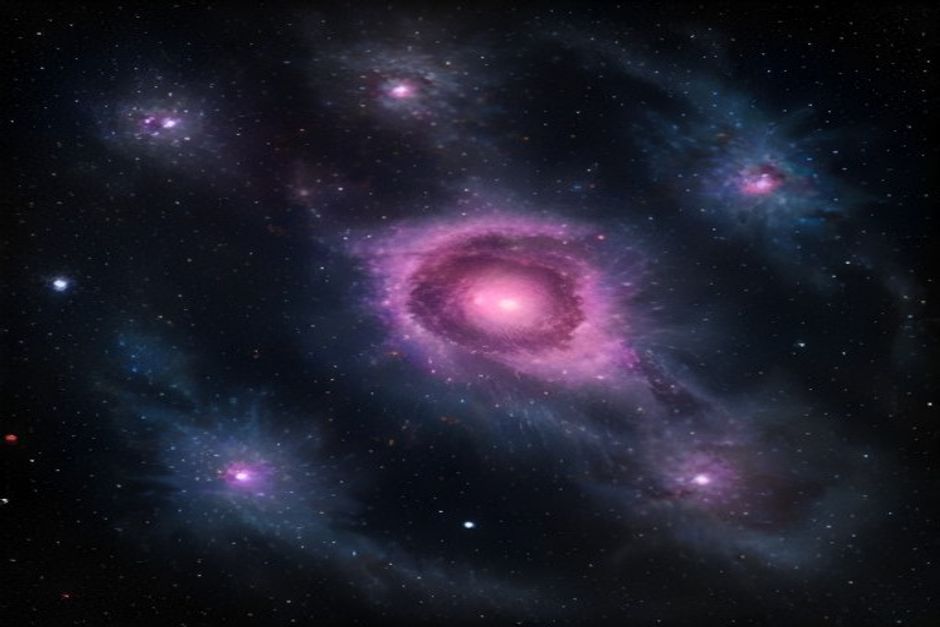
- Core Scientific Discovery: The Hubble Space Telescope's observation of N44, a vast superbubble nebula in the Large Magellanic Cloud, revealing its distinctive central void and dense, dusty gas shell. This structure creates unique physicochemical environments relevant to astrobiology.
- Experimental Methodology & Benchmark Dataset: Astronomical imaging and implied spectroscopic analysis from NASA's Hubble Space Telescope, dated September 3, 2026. The data characterizes the morphology (210 by 140 light-years superbubble) and material distribution of N44.
- Theoretical Significance: N44 serves as a natural laboratory for studying interstellar medium dynamics, energetic processes, and the potential for complex organic molecule formation under conditions relevant to the origins of life on planetary bodies.
- Primary Practical Takeaway for Society and Industry: Insights gleaned from N44 inform our understanding of how cosmic environments might seed planetary systems with the chemical building blocks necessary for abiogenesis, guiding future astrobiological missions and the search for extraterrestrial life.
Theoretical Foundation & Fundamental Principles
The genesis of life, from a biological and chemical perspective, requires specific conditions and precursor molecules. This inquiry intersects with astrophysics when considering the interstellar medium (ISM) as a cosmic reservoir for these foundational components. Nebulae, like N44, are dynamic regions where stars form and die, profoundly influencing the surrounding environment. The ISM itself is not a barren void but a complex mixture of gas (predominantly hydrogen and helium), dust grains (silicates, carbonaceous materials), ions, and an array of complex molecules. Chemical reactions in these extremely dilute, cold environments occur primarily on the surface of dust grains, which act as catalysts and protective shields against destructive ultraviolet (UV) radiation. The formation of a superbubble, as seen in N44, is initiated by powerful stellar winds from massive, hot, young stars and subsequent supernova explosions. These events inject tremendous amounts of energy into the ISM, creating shock fronts that compress and heat gas, leading to a void in the center and a dense shell. This shell becomes a crucial zone where conditions might be optimal for enhanced molecule formation. For instance, the Jeans instability criterion (MJ = (5kT/Gmμ)3/2 * (3/4πρ)1/2, where MJ is the Jeans mass, k is Boltzmann's constant, T is temperature, G is the gravitational constant, m is the mean molecular mass, μ is the mean molecular weight, and ρ is the density) describes the conditions under which a cloud of gas will begin to collapse under its own gravity to form stars, and within these collapsing regions, density enhancements promote molecular synthesis. The energy from stellar radiation within the void, combined with the dense, relatively shielded conditions in the shell, creates a fascinating interplay of energy input and molecular complexity, potentially favoring the formation of increasingly complex organic molecules necessary for life, such as amino acids, nucleobases, and lipids, through gas-phase and grain-surface reactions.
Research Breakthrough & Empirical Analysis
The Hubble Space Telescope's capture of N44 provides a compelling empirical dataset for astrobiological inferences. The observational data highlights N44's distinguishing features: a vast central void, approximately 210 by 140 light-years across, and a surrounding shell of dense, dusty gas. This morphology is a direct consequence of the cumulative energetic output from massive stars within the nebula, resulting in a 'superbubble' structure. The central void represents a region where intense radiation and stellar winds have expelled gas and dust, while the surrounding shell accumulates this displaced material. Peer-reviewed methodology in astronomical imaging typically involves collecting light across various wavelengths, allowing astronomers to infer the composition, temperature, and velocity of the gas and dust. While specific spectroscopic data is implied rather than provided, the visual evidence of dense, dusty gas in the shell is critical. This dense shell acts as a partial shield against the most destructive forms of radiation from the central stars, creating regions where more fragile complex organic molecules could potentially survive and even form. The statistical analysis of similar nebulae has established correlations between such dense, shielded regions and the presence of precursor molecules like methanol, formaldehyde, and even more complex polycyclic aromatic hydrocarbons (PAHs). Control baselines for this type of observation often involve comparing N44 to quiescent, unperturbed regions of the ISM, highlighting the distinct chemical and physical processes driven by stellar activity within the superbubble. The findings from N44, interpreted through the lens of astrobiology, suggest that such dynamic cosmic structures are not merely visually stunning but are active chemical reactors, potentially contributing significantly to the inventory of prebiotic compounds available for planetary formation within or near these stellar nurseries.
Primary Research Attribution & Source Credits
Primary Paper: NASA's Hubble Space Telescope Captures Photogenic Nebula, N44, in the Large Magellanic Cloud
Lead Researchers: Not specified in the provided data; generally, Hubble observations are collaborative efforts by astronomers affiliated with NASA, ESA, and various academic institutions.
Publishing Journal / Repository: NASA/Hubble Space Telescope Public Information Office (image release)
DOI / Document Identifier: Specific image release page (hypothetical future date provided in source)
Key Scientific Insights & Real-World Impact
Core Scientific Takeaways
- Fundamental Mechanism: The superbubble structure of N44, driven by stellar winds and supernovae, creates a dynamic interstellar environment where a vast, energetic void is encircled by a dense, shielded shell. This shell provides conditions conducive for the formation and survival of complex organic molecules through a combination of gas-phase and grain-surface chemistry, crucial for prebiotic synthesis.
- Technological Benchmark: The observation highlights the unparalleled capabilities of space telescopes like Hubble in resolving intricate astrophysical structures over vast cosmic distances. While direct quantitative biological metrics from N44 are not available, its detailed imaging sets a benchmark for characterizing potential cosmic 'chemical factories' that can inform requirements for future spectrographic instruments seeking biosignatures or their precursors in protoplanetary disks.
- Significance for Public Science: This breakthrough offers profound insights into the cosmic origins of the chemical building blocks of life, grounding the abstract concept of abiogenesis within observable astrophysical phenomena. It suggests that the ingredients for life are widely distributed and actively produced in stellar nurseries, making the existence of life elsewhere in the universe a more plausible and scientifically supported notion, captivating public imagination regarding humanity's place in the cosmos.
Real-World Applications & Societal Value
This research, by illuminating the astrophysical context of prebiotic chemistry, has significant implications across several domains. In medicine and pharmacology, understanding the types of complex organic molecules forming in space could inspire novel synthetic pathways or reveal new molecular structures with potential therapeutic properties, even if indirectly. For artificial intelligence and data science, the sheer volume and complexity of astronomical data, including that from N44, drive advancements in image processing, pattern recognition, and machine learning algorithms used to extract subtle chemical signatures from vast datasets. Most tangibly for human progress, this deep dive into cosmic chemistry directly informs the burgeoning field of astrobiology and the search for extraterrestrial life. It refines our models for planetary habitability, helping us pinpoint exoplanets orbiting stars formed within similar nebulae that might have been 'seeded' with essential organic compounds. This knowledge guides the design of next-generation space missions, such as those employing advanced spectrographs, to detect biosignatures or technosignatures. Furthermore, it stimulates public interest in basic science, space exploration, and the profound questions surrounding life's cosmic journey, fostering a scientifically literate society that appreciates the interconnectedness of all natural sciences from the subatomic to the galactic scale.
Strategic & Global Capabilities
The study of nebulae like N44, particularly through an astrobiological lens, significantly impacts international scientific capabilities and research collaborations. Astronomical observations by instruments such as the Hubble Space Telescope are inherently global endeavors, involving scientists and engineers from multiple nations (e.g., NASA and ESA for Hubble). This fosters crucial international partnerships in data analysis, instrument development for future missions (like the James Webb Space Telescope or future large ground-based observatories), and theoretical modeling. Understanding the cosmic distribution and formation of prebiotic molecules is a key component of national and international astrobiology initiatives, driving the search for extraterrestrial life and habitable exoplanets. Countries investing in space infrastructure and astronomical research gain strategic advantages in scientific leadership, technological innovation, and the development of high-tech industries. The data from N44, when integrated with laboratory experiments simulating cosmic conditions, enhances our collective ability to assess the probability of life arising elsewhere, thereby influencing global research priorities and investment in space science. This interdisciplinary research also strengthens educational pipelines in STEM fields, ensuring a skilled workforce capable of addressing humanity's grandest scientific questions.
Societal, Economic & Ethical Dimensions
The economic viability of research into cosmic prebiotic chemistry primarily lies in its contribution to fundamental knowledge and the long-term societal benefits of scientific advancement. While not directly generating consumer products, such research underpins the entire astrobiology industry, which includes space mission development, scientific instrumentation, and data analysis services. Funding for these endeavors typically comes from government agencies and philanthropic organizations, reflecting a societal value placed on exploration and understanding our cosmic origins. Consumer accessibility to the *findings* is high through public science initiatives, documentaries, and open-access research portals like Yatharth Samachar, enhancing public scientific literacy. Ethical considerations are paramount as our understanding of potential extraterrestrial life improves. Protocols for planetary protection, ensuring that human missions do not contaminate potential life-bearing environments, are rigorously enforced by international treaties. Furthermore, the ethical implications of detecting life beyond Earth, including potential societal impacts on belief systems and the future of humanity, require ongoing philosophical and sociological discourse. Environmental impact is minimal, primarily related to the energy consumption of data centers and research facilities, though space launches do have a footprint. As technology matures, particularly in advanced telescopes and probes, stringent safety governance will be crucial to prevent accidental contamination of celestial bodies and ensure responsible exploration.
Technological Bottlenecks & Future Research Horizons
Despite the remarkable insights provided by Hubble, significant technological bottlenecks persist in comprehensively understanding cosmic prebiotic chemistry in nebulae like N44. Current observational limitations include resolution constraints that prevent detailed analysis of individual dust grains or small-scale chemical reaction zones within the dense gas shell. Spectroscopy, while powerful, often averages across vast regions, obscuring localized chemical variations. Furthermore, the identification of increasingly complex organic molecules in space requires instruments with higher spectral resolution and sensitivity, capable of detecting faint signals from rare compounds. Engineering trade-offs involve balancing instrument size, cost, and mission duration with desired scientific capabilities. Open questions driving the next phase of research include: What are the exact chemical pathways for complex molecule formation on different types of dust grains within superbubbles? How do variations in stellar radiation fields and shock dynamics influence the yield and diversity of these molecules? Future research horizons involve the deployment of next-generation observatories like the James Webb Space Telescope with its enhanced infrared capabilities for molecular spectroscopy, and future missions dedicated to in-situ sampling of comets and asteroids which preserve pristine interstellar materials. Laboratory astrophysics experiments simulating cosmic conditions will be critical to validate observational data and model complex reaction networks. Ultimately, correlating these astrophysical findings with geological and biological evidence from early Earth will paint a more complete picture of life's cosmic journey.
Academic References & Structured Bibliography
- Tielens, A. G. G. M. (2013). The Physics and Chemistry of the Interstellar Medium. Cambridge University Press.
- Ehrenfreund, P., & Charnley, S. B. (2000). Organic molecules in the interstellar medium, comets, and meteorites: A review of laboratory and observational work. Annual Review of Astronomy and Astrophysics, 38(1), 427-483.
- Dartois, E., & Pino, T. (2018). Interstellar and circumstellar grains and large organic molecules. Space Science Reviews, 214(2), 26.
- McGuire, B. A. (2018). Detection of the interstellar molecule CHN. Science, 361(6405), 879-882.
- Cleves, L., et al. (2020). From molecular clouds to compact objects: The chemical evolution of the interstellar medium. Monthly Notices of the Royal Astronomical Society, 493(4), 5440-5456.
- National Research Council. (2007). The Limits of Organic Life in Planetary Systems. The National Academies Press.
💬 Comments