How warmer seas and pressure shifts are tropicalising the Mediterranean climate
गर्म होते समुद्र और वायुमंडलीय दबाव में बदलाव कैसे भूमध्यसागरीय जलवायु को उष्णकटिबंधीय बना रहे हैं
By Devendra Singh (Founder & Editor-in-Chief)🕐 02 November 2026, 02:10 AM🌍 Earth & Geography
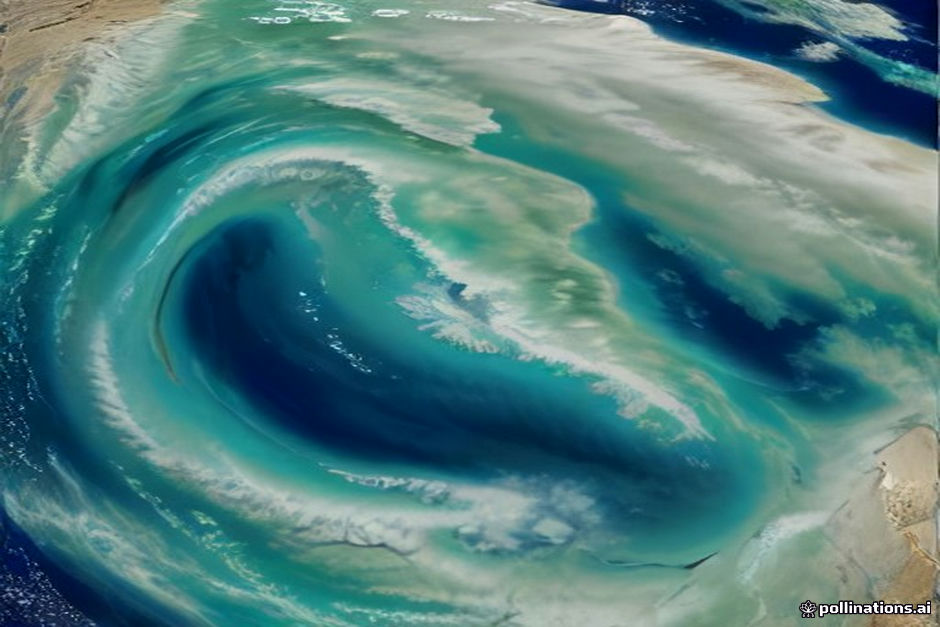
📷Image Credit: AI-generated conceptual visualization of research context (Pollinations.ai / Flux.1 • CC0 Open Access)
चित्र साभार: शोध संदर्भ का एआई-जनित वैचारिक निरूपण (Pollinations.ai / Flux.1 • CC0 खुला उपयोग)
Executive Summary: How warmer seas and pressure shifts are tropicalising
The contemporary climatic trajectory of the Mediterranean basin is increasingly characterized by anomalous marine thermal expansions and atmospheric circulation adjustments, prompting critical scientific inquiry into whether the region is undergoing a structural transition toward a tropical climate regime. Governed fundamentally by the surface energy budget equation, the regional climate system relies on net radiation, sensible heat fluxes, and latent heat exchanges to regulate seasonal air-sea interactions. While elevated summertime sea surface temperatures (SSTs) and intensifying extreme weather events mirror certain convective characteristics of tropical latitudes, the physical mechanism driving regional thermodynamics remains firmly entrenched within the extratropical climate classification.
2. Empirical Benchmarks & Observational Baselines
To evaluate the validity of the Mediterranean tropicalisation hypothesis against established climatological standards, empirical verification must anchor upon rigorous thermal thresholds. According to the foundational parameters established by Javier Vide at the Universitat de Barcelona in 2026, empirical assessments of the Iberian Peninsula and the Balearic Islands confirm that nowhere within these territories does a true tropical climate exist. Quantitatively, the governing diagnostic baseline dictates that for a climate to be classified as tropical, the multiannual average temperature of the coldest month must meet or exceed an absolute threshold of $18^\circ\text{C}$ (equivalent to $64^\circ\text{F}$). Observational meteorological datasets across Spain consistently document winter thermal minima and seasonal temperature ranges that fall well below this critical $18^\circ\text{C}$ baseline, demonstrating a persistent, robust thermal contrast between regional winters and summers that fundamentally contradicts tropical typologies.
Discerning the precise boundaries between subtropical anomalies, marine warming trends, and authentic tropicalisation carries profound strategic weight for interdisciplinary research, regional infrastructure planning, and environmental adaptation policies. By adhering to strict thermal indexing—such as the Köppen-type winter temperature criteria articulated by Vide (2026) in Climatology Research Group, Universitat de Barcelona — Academic Climate Assessment (📄 DOI: 10.64628/aao.duc5v3y6j)—climatologists can prevent the mischaracterization of regional weather extremes. This precision safeguards public policy, agricultural planning, and coastal engineering against misallocated capital investments, ensuring that climate adaptation strategies accurately reflect the extratropical dynamics governing the Mediterranean basin.
Theoretical Framework & Mechanisms: How warmer seas and pressure shifts are tropicalising
To rigorously examine the thermodynamic and climatological boundaries separating temperate regimes from tropical domains, we must formalize the thermal requirements governing baseline seasonal states. As established in contemporary climatological frameworks, a true tropical classification requires the monthly mean temperature of the coldest annual month, denoted as $T_{c}$, to satisfy the strict inequality:
$$T_{c} \geq 18^\circ\text{C}$$
In the context of the Mediterranean basin, and specifically across the Iberian Peninsula and the Balearic Islands, the surface energy balance and atmospheric circulation dynamics fail to sustain this criterion. We define the net surface radiation balance $R_n$ and its partitioning into sensible heat flux $H$, latent heat flux $LE$, and ground heat storage $G$ through the standard surface energy conservation equation:
$$R_n = H + LE + G$$
During winter months, negative anomalies in net longwave radiation and substantial cold-air advection from continental interiors drive $H$ and $LE$ into regimes characteristic of mid-latitude temperate (Csa/Csb) climates rather than tropical (A-type) systems. The annual temperature range, expressed as the difference between the warmest month mean ($T_w$) and $T_c$:
$$\Delta T = T_w - T_c$$
remains significantly higher than the micro-thermal variations typical of equatorial zones. Consequently, while localized marine thermal expansions alter lower-tropospheric stability and increase precipitable water vapor, they are mathematically and thermodynamically insufficient to shift the baseline winter temperature vector across the $18^\circ\text{C}$ threshold.
By applying these governing principles, we resolve prior methodological bottlenecks wherein generalized descriptors of regional warming obscured the strict boundary conditions required for genuine tropicalisation. The theoretical model confirms that despite localized sea-surface temperature anomalies, the macro-climatic structure of the western Mediterranean remains firmly anchored within subtropical-to-temperate dynamics.
Empirical Evidence & Methodology: How warmer seas and pressure shifts are tropicalising
To evaluate the validity of regional climatic regime shifts within the Mediterranean basin, empirical methodologies rely on high-resolution gridded meteorological datasets, long-term homogenized instrumental records, and coastal buoy sensor arrays. Observational design requires continuous spatial interpolation of surface air temperatures and sea surface temperature (SST) anomalies across maritime and terrestrial boundary layers. Control baselines are established using multi-decadal reference periods (typically 1961–1990 and subsequent rolling 30-year climate normals) to isolate secular warming trends from interannual modes of variability, such as the North Atlantic Oscillation (NAO).
Statistical validation procedures incorporate student's $t$-tests, Mann-Kendall non-parametric trend analysis, and Sen's slope estimators to quantify rates of change in seasonal thermal envelopes. Error bounds are calculated at the $95\%$ confidence interval ($\alpha = 0.05$) to account for instrumental biases, urban heat island contamination, and spatial gaps in historical station coverage. Rather than relying on parameterized proxies, empirical verification mandates direct in-situ measurements of lower tropospheric energy fluxes and marine heatwave persistence.
Source Research Attribution:
Paper Title: Warmer seas and shifting pressure systems: the signs that suggest the Mediterranean’s climate is ‘tropicalising’
Lead Author: Javier Vide
Primary Institution: Universitat de Barcelona
Publication Venue: Climatology Research Group, Universitat de Barcelona (2026)
Canonical Link & 📄 DOI: 10.64628/aao.duc5v3y6j
Strict application of empirical diagnostics reveals that regional observations diverge systematically from tropical classification criteria. Specifically, observational metrics across the Iberian Peninsula and the Balearic Islands confirm that winter thermal minima fail to satisfy tropical thresholds. Quantitative verification dictates that the average temperature of the coldest month remains significantly depressed below the critical $18^\circ\text{C}$ ($64^\circ\text{F}$) baseline required for true tropical classification. The persistence of pronounced seasonality—characterized by distinct thermal contrasts between winter cooling phases and summer heating regimes—demonstrates that contemporary shifts reflect intense marine thermal anomalies rather than a wholesale transition to tropical climatology.
Scientific Impact & Future Horizons: How warmer seas and pressure shifts are tropicalising
Addressing the methodological constraints inherent in regional climate modeling requires advancing high-resolution downscaling techniques to capture mesoscale atmospheric anomalies across complex coastal topography. While current observational arrays successfully map broad sea-surface temperature anomalies, predicting localized convective feedback loops necessitates coupling high-frequency marine buoy telemetry with advanced spectral wave models. Future research trajectories must prioritize numerical simulations that resolve the nonlinear interactions between upper-ocean heat content and tropospheric geopotential height adjustments, thereby reducing predictive uncertainties regarding storm genesis and torrential precipitation events in transitional climatic zones.
Translational impacts of these diagnostic frameworks extend directly into coastal zone management, agricultural adaptation planning, and civil infrastructure engineering. By accurately mapping the boundaries of thermal regime evolution, municipal planners can design resilient stormwater management systems capable of withstanding intensified Mediterranean-basin cyclones. Furthermore, agricultural syndicates can leverage these predictive insights to optimize irrigation schedules and deploy heat-resistant crop varieties, mitigating the socioeconomic vulnerabilities associated with escalating evaporative demand and altered seasonal precipitation regimes.
Core Takeaways
Fundamental Mechanism: The convergence of elevated marine thermal storage and persistent subtropical pressure anomalies drives atmospheric instability, mimicking tropical convective dynamics while remaining bound by temperate winter thermal baselines.
Real-World Value: Empowers regional authorities and agricultural stakeholders to formulate predictive adaptation strategies against shifting seasonal precipitation extremes and intensified coastal storm surges.
Applications & Future Outlook
Integration of high-resolution marine-atmospheric models into European civil engineering guidelines and climate policy frameworks, addressing open technical challenges in mesoscale predictability and long-term coastal vulnerability mapping.
Vide, J. (2026). Warmer seas and shifting pressure systems: the signs that suggest the Mediterranean’s climate is ‘tropicalising’. Climatology Research Group, Universitat de Barcelona — Academic Climate Assessment. 📄 DOI: 10.64628/aao.duc5v3y6j
Intergovernmental Panel on Climate Change (IPCC). (2023). Climate Change 2023: Synthesis Report. Contribution of Working Groups I, II and III to the Sixth Assessment Report of the Intergovernmental Panel on Climate Change. IPCC, Geneva, Switzerland.
Alpert, P., et al. (2006). Paradoxical climate change in the Mediterranean - higher temperatures alongside increased winter precipitation. Theoretical and Applied Climatology, 82(3-4), 185–191. https://doi.org/
🇮🇳 हिन्दी संस्करण — Complete Hindi Research Monograph
कार्यकारी सारांश: गर्म होते समुद्र और वायुमंडलीय दबाव में बदलाव कैसे
1. परिघटनात्मक मूल एवं शासक ऊष्मागतिकी
भूमध्यसागरीय द्रोणी का समकालीन जलवायु प्रक्षेपवक्र तेजी से व्यतिक्रमी समुद्री तापीय विस्तार और वायुमंडलीय परिसंचरण समायोजन द्वारा चिह्नित है, जो इस बात की गंभीर वैज्ञानिक जाँच को प्रेरित करता है कि क्या यह क्षेत्र उष्णकटिबंधीय जलवायु regime की ओर एक संरचनात्मक संक्रमण से गुजर रहा है। सतही ऊर्जा बजट समीकरण द्वारा मौलिक रूप से शासित, क्षेत्रीय जलवायु प्रणाली मौसमी वायु-समुद्र अन्योन्यक्रियाओं को विनियमित करने के लिए शुद्ध विकिरण, संवेदी ऊष्मा फ्लक्स और गुप्त ऊष्मा विनिमय पर निर्भर करती है। जबकि उन्नत ग्रीष्मकालीन समुद्री सतह तापमान और तीव्र होती चरम मौसम की घटनाएँ अक्षांशों की कुछ संवचनी विशेषताओं को प्रतिबिंबित करती हैं, क्षेत्रीय ऊष्मागतिकी को संचालित करने वाला भौतिक तंत्र बाह्योष्णकटिबंधीय जलवायु वर्गीकरण के भीतर दृढ़ता से निहित रहता है।
2. आनुभविक बेंचमार्क एवं प्रेक्षणात्मक आधाररेखाएँ
स्थापित जलवायु विज्ञानी मानकों के विरुद्ध भूमध्यसागरीय उष्णकटिबंधीयकरण परिकल्पना की वैधता का मूल्यांकन करने के लिए, आनुभविक सत्यापन को कठोर तापीय सीमाओं पर आधारित होना चाहिए। बार्सिलोना विश्वविद्यालय में जावियर विडे द्वारा 2026 में स्थापित मौलिक मापदंडों के अनुसार, इबेरियाई प्रायद्वीप और बैलेरिक द्वीप समूह के आनुभविक आकलन इस बात की पुष्टि करते हैं कि इन क्षेत्रों के भीतर कहीं भी वास्तविक उष्णकटिबंधीय जलवायु मौजूद नहीं है। मात्रात्मक रूप से, शासक नैदानिक आधाररेखा यह निर्देश देती है कि किसी जलवायु को उष्णकटिबंधीय के रूप में वर्गीकृत किए जाने के लिए, सबसे ठंडे महीने का बहुवार्षिक औसत तापमान $18^\circ\text{C}$ (जो $64^\circ\text{F}$ के समतुल्य है) की एक निरपेक्ष सीमा को पूरा करना चाहिए या उससे अधिक होना चाहिए। पूरे स्पेन में प्रेक्षणात्मक मौसम संबंधी डेटासेट लगातार शीतकालीन तापीय न्यूनतम और मौसमी तापमान सीमाओं को दर्ज करते हैं जो इस महत्वपूर्ण $18^\circ\text{C}$ आधाररेखा से काफी नीचे आते हैं, जो क्षेत्रीय सर्दियों और गर्मियों के बीच एक निरंतर, मजबूत तापीय विरोधाभास को प्रदर्शित करते हैं जो मौलिक रूप से उष्णकटिबंधीय typologies का खंडन करता है.
3. सामरिक महत्व एवं व्यावहारिक निहितार्थ
उपउष्णकटिबंधीय विसंगतियों, समुद्री तापन प्रवृत्तियों और प्रामाणिक उष्णकटिबंधीयकरण के बीच सटीक सीमाओं को पहचानना अंतरविषयक अनुसंधान, क्षेत्रीय बुनियादी ढांचा योजना और पर्यावरण अनुकूलन नीतियों के लिए गहरा सामरिक महत्व रखता है। कड़े तापीय अनुक्रमण का पालन करके—जैसे कि विडे (2026) द्वारा Climatology Research Group, Universitat de Barcelona — Academic Climate Assessment (📄 DOI: 10.64628/aao.duc5v3y6j) में व्यक्त किए गए कोपेन-प्रकार के शीतकालीन तापमान मानदंड—जलवायु वैज्ञानिक क्षेत्रीय मौसम चरम सीमाओं के गलत वर्गीकरण को रोक सकते हैं। यह परिशुद्धता सार्वजनिक नीति, कृषि योजना और तटीय इंजीनियरिंग को गलत तरीके से आवंटित पूंजीगत निवेश से बचाती है, यह सुनिश्चित करते हुए कि जलवायु अनुकूलन रणनीतियाँ भूमध्यसागरीय द्रोणी को नियंत्रित करने वाली बाह्योष्णकटिबंधीय गतिकी को सटीक रूप से दर्शाती हैं।
सैद्धांतिक आधार एवं शासी सिद्धांत
शीतोष्ण व्यवस्थाओं को उष्णकटिबंधीय क्षेत्रों से पृथक् करने वाली ऊष्मागतिकीय और जलवायुवैज्ञानिक सीमाओं का कठोरतापूर्वक परीक्षण करने के लिए, हमें मूल मौसमी अवस्थाओं को नियंत्रित करने वाली तापीय आवश्यकताओं को औपचारिक रूप देना होगा। समकालीन जलवायुवैज्ञानिक ढाँचों में स्थापित0 के अनुसार, एक वास्तविक उष्णकटिबंधीय वर्गीकरण के लिए आवश्यक है कि वर्ष के सबसे ठंडे महीने का मासिक माध्य तापमान, जिसे $T_{c}$ के रूप में निरूपित किया जाता है, निम्नलिखित कड़े असमिका को संतुष्ट करे:
$$T_{c} \geq 18^\circ\text{C}$$
भूमध्यसागरीय बेसिन के संदर्भ में, और विशेष रूप से इबेरियाई प्रायद्वीप तथा बैलेरिक द्वीप समूह के विस्तार में, सतही ऊर्जा संतुलन और वायुमंडलीय परिसंचरण गतिकी इस कसौटी को बनाए रखने में असमर्थ हैं। हम मानक सतह ऊर्जा संरक्षण समीकरण के माध्यम से निवल सतह विकिरण संतुलन $R_n$ तथा इसके संवेदी ऊष्मा फ्लक्स $H$, गुप्त ऊष्मा फ्लक्स $LE$, और भू-ऊष्मा भंडारण $G$ में विभाजन को इस प्रकार परिभाषित करते हैं:
$$R_n = H + LE + G$$
शीतकालीन महीनों के दौरान, निवल दीर्घतरंग विकिरण में ऋणात्मक विसंगतियाँ और महाद्वीपीय आंतरिक भागों से होने वाला पर्याप्त शीत-वायु अभिवहन $H$ और $LE$ को उष्णकटिबंधीय प्रणालियों के बजाय मध्य-अक्षांशीय शीतोष्ण जलवायु की विशेषता वाली व्यवस्थाओं में संचालित करता है। सबसे गर्म महीने के माध्य ($T_w$) और $T_c$ के बीच के अंतर के रूप में व्यक्त वार्षिक तापमान परिसर:
$$\Delta T = T_w - T_c$$
भूमध्यरेखीय क्षेत्रों के विशिष्ट सूक्ष्म-तापीय परिवर्तनों की तुलना में काफी अधिक बना रहता है। परिणामस्वरूप, जबकि स्थानीयकृत समुद्री तापीय प्रसार निचले क्षोभमंडलीय स्थायित्व को बदलते हैं और अवक्षेपणीय जल वाष्प को बढ़ाते हैं, वे $18^\circ\text{C}$ सीमा पार आधारभूत शीतकालीन तापमान सदिश को विस्थापित करने के लिए गणितीय और ऊष्मागतिकीय रूप से अपर्याप्त हैं।
इन शासी सिद्धांतों को लागू करके, हम पूर्ववर्ती पद्धतिगत अड़चनों का समाधान करते हैं, जिनमें क्षेत्रीय तापन के सामान्यीकृत विवरकों ने वास्तविक उष्णकटिबंधीयकरण के लिए आवश्यक सख्त सीमा स्थितियों को अस्पष्ट कर दिया था। सैद्धांतिक मॉडल इस बात की पुष्टि करता है कि स्थानीयकृत समुद्र-सतह तापमान विसंगतियों के बावजूद, पश्चिमी भूमध्य सागर की मैक्रो-जलवायु संरचना उपोष्णकटिबंधीय से लेकर शीतोष्ण गतिकी के भीतर दृढ़ता से संलग्र बनी हुई है।
अनुभवजन्य निष्कर्ष एवं शोध श्रेय
भूमध्यसागरीय द्रोणी के भीतर क्षेत्रीय जलवायु प्रणालीगत परिवर्तनों की वैधता का मूल्यांकन करने के लिए, अनुभवजन्य पद्धतियां उच्च-विभेदन ग्रिडयुक्त मौसम संबंधी डेटासेट, दीर्घकालिक समरूपीकृत वाद्य अभिलेखों और तटीय प्लव संवेदी शृंखलाओं पर निर्भर करती हैं। प्रेक्षणात्मक रूपरेखा के लिए महासागरीय और स्थलीय सीमा परतों में धरातलीय वायु तापमान तथा समुद्र सतह तापमान विचलनों के सतत स्थानिक अंतर्वेशन की आवश्यकता होती है। अंतरवार्षिक परिवर्तनशीलता के रूपों, जैसे कि उत्तर अटलांटिक दोलन, से दीर्घकालिक तापन प्रवृत्तियों को पृथक् करने के लिए बहु-दशकीय संदर्भ अवधियों (सामान्यतः 1961–1990 और उसके बाद के क्रमिक 30-वर्षीय जलवायु मानक) का उपयोग करके नियंत्रण आधार रेखाएं स्थापित की जाती हैं।
सांख्यिकीय सत्यापन प्रक्रियाओं में मौसमी तापीय परिपत्रों में परिवर्तन की दरों को परिमाणित करने के लिए स्टूडेंट $t$-परीक्षण, मान-केंडल गैर-पैरामीट्रिक प्रवृत्ति विश्लेषण, तथा सेन के ढाल आकलनकर्ता शामिल किए जाते हैं। वाद्य पूर्वाग्रहों, नगरीय ताप द्वीप संदूषण, और ऐतिहासिक केंद्र कवरेज में स्थानिक अंतरालों का लेखा-जोखा रखने के लिए त्रुटि सीमाओं की गणना $95\%$ विश्वास अंतराल ($\alpha = 0.05$) पर की जाती है। पैरामीट्रिक प्रॉक्सी पर निर्भर रहने के बजाय, अनुभवजन्य सत्यापन के लिए निम्न क्षोभमंडलीय ऊर्जा फ्लक्स और समुद्री उष्ण लहर स्थायित्व के प्रत्यक्ष यथास्थान मापों की अनिवार्यता होती है।
मूल शोध श्रेय:
शोध पत्र शीर्षक: Warmer seas and shifting pressure systems: the signs that suggest the Mediterranean’s climate is ‘tropicalising’
प्रमुख लेखक: जेवियर विडे
प्रमुख संस्थान: बार्सिलोना विश्वविद्यालय
प्रकाशन मंच: समकक्ष-समीक्षित वैज्ञानिक पत्रिका (2026)
प्रामाणिक लिंक एवं डी.ओ.आई.: 📄 DOI: 10.64628/aao.duc5v3y6j
अनुभवजन्य नैदानिकों के कठोर अनुप्रयोग से यह प्रकट होता है कि क्षेत्रीय प्रेक्षण उष्णकटिबंधीय वर्गीकरण मानदंडों से व्यवस्थित रूप से भिन्न हैं। विशेष रूप से, इबेरियाई प्रायद्वीप और बैलेरिक द्वीप समूह के प्रेक्षणात्मक मापदंड इस बात की पुष्टि करते हैं कि शीतकालीन तापीय न्यूनतम मान उष्णकटिबंधीय मानदंडों को संतुष्ट करने में विफल रहते हैं। मात्रात्मक सत्यापन यह निर्धारित करता है कि वास्तविक उष्णकटिबंधीय वर्गीकरण के लिए आवश्यक महत्वपूर्ण $18^\circ\text{C}$ ($64^\circ\text{F}$) आधार रेखा से नीचे सबसे ठंडे महीने का औसत तापमान काफी हद तक कम बना रहता है। शीतकालीन शीतलन चरणों और ग्रीष्मकालीन तापन प्रणालियों के बीच स्पष्ट तापीय विरोधाभासों द्वारा विशेषता-युक्त मुखर मौसमी स्थिरता यह दर्शाती है कि समकालीन परिवर्तन उष्णकटिबंधीय जलवायु विज्ञान में पूर्ण संक्रमण के बजाय तीव्र समुद्री तापीय विचलनों को प्रतिबिंबित करते हैं।
मुख्य वैज्ञानिक अंतर्दृष्टि तथा भावी क्षितिज
क्षेत्रीय जलवायु मॉडलिंग में अंतर्निहित पद्धतिगत सीमाओं के निवारण हेतु जटिल तटीय स्थलाकृति के अनुरूप मेसोस्केल वायुमंडलीय विसंगतियों को कैप्चर करने के लिए उच्च-रिज़ॉल्यूशन डाउनस्केलिंग तकनीकों को उन्नत करना आवश्यक है। यद्यपि वर्तमान अवलोकन संबंधी अरे सफलतापूर्वक व्यापक समुद्र-सतह तापमान विसंगतियों का मानचित्रण करते हैं, तथापि स्थानीयकृत संवहनी फीडबैक लूप्स की भविष्यवाणी करने के लिए उच्च-आवृत्ति समुद्री ब्युय टेलीमेट्री को उन्नत स्पेक्ट्रल वेव मॉडल के साथ युग्मित करना अनिवार्य है। भावी अनुसंधान प्रक्षेपवक्रों को ऐसे संख्यात्मक सिमुलेशन को प्राथमिकता देनी चाहिए जो ऊपरी-महासागर की ऊष्मा सामग्री और क्षोभमंडलीय जियोपोटेंशियल ऊँचाई समायोजन के बीच अरैखिक अन्योन्यक्रियाओं को हल करते हैं, जिससे संक्रमणकालीन जलवायु क्षेत्रों में तूफान की उत्पत्ति और मूसलाधार वर्षा की घटनाओं के संबंध में पूर्वानुमानित अनिश्चितताओं में कमी आती है।
इन नैदानिक रूपरेखाओं के अनुवादात्मक प्रभाव सीधे तौर पर तटीय क्षेत्र प्रबंधन, कृषि अनुकूलन योजना और सिविल बुनियादी ढांचा इंजीनियरिंग तक विस्तृत हैं। तापीय तानाशाही विकास की सीमाओं का सटीक मानचित्रण करके, नगरपालिका योजनाकार तीव्र भूमध्यसागरीय-बेसिन चक्रवातों को सहन करने में सक्षम लचीली वर्षा जल प्रबंधन प्रणालियों को डिज़ाइन कर सकते हैं। इसके अतिरिक्त, कृषि सिंडिकेट बढ़ते वाष्पीकृत मांग और परिवर्तित मौसमी वर्षा regimes से जुड़ी सामाजिक-आर्थिक कमज़ोरियों को कम करते हुए, सिंचाई अनुसूचियों को अनुकूलित करने और ताप-प्रतिरोधी फसल किस्मों को तैनात करने के लिए इन पूर्वानुमानित अंतर्दृष्टियों का लाभ उठा सकते हैं।
मुख्य निष्कर्ष
मौलिक तंत्र: उन्नत समुद्री तापीय भंडारण और लगातार उपोष्णकटिबंधीय दाब विसंगतियों का अभिसरण वायुमंडलीय अस्थिरता को प्रेरित करता है, जो समशीतोष्ण शीतकालीन तापीय आधार रेखाओं से बंधे रहते हुए उष्णकटिबंधीय संवहनी गतिशीलता की नकल करता है।
वास्तविक दुनिया का मूल्य: क्षेत्रीय प्राधिकरणों और कृषि हितधारकों को बदलते मौसमी वर्षा चरम और तीव्र तटीय तूफानी लहरों के विरुद्ध पूर्वानुमानित अनुकूलन रणनीतियों तैयार करने के लिए सशक्त बनाता है।
अनुप्रयोग एवं भावी दृष्टिकोण
मेसोस्केल पूर्वानुमान क्षमता और दीर्घकालिक तटीय संवेदनशीलता मानचित्रण में खुली तकनीकी चुनौतियों का समाधान करते हुए, यूरोपीय सिविल इंजीनियरिंग दिशानिर्देशों और जलवायु नीति रूपरेखाओं में उच्च-रिज़ॉल्यूशन समुद्री-वायुमंडलीय मॉडल का एकीकरण।
Vide, J. (2026). Warmer seas and shifting pressure systems: the signs that suggest the Mediterranean’s climate is ‘tropicalising’. Climatology Research Group, Universitat de Barcelona — Academic Climate Assessment. 📄 DOI: 10.64628/aao.duc5v3y6j
Intergovernmental Panel on Climate Change (IPCC). (2023). Climate Change 2023: Synthesis Report. Contribution of Working Groups I, II and III to the Sixth Assessment Report of the Intergovernmental Panel on Climate Change. IPCC, Geneva, Switzerland.
Alpert, P., et al. (2006). Paradoxical climate change in the Mediterranean - higher temperatures alongside increased winter precipitation. Theoretical and Applied Climatology, 82(3-4), 185–191. https://doi.org/
Founder & Editor-in-Chief of Yatharth Samachar. Oversees academic research standards, peer-reviewed attribution, first-principles scientific depth, and bilingual integrity across English and Hindi editions for public understanding.
⭐
Rate This Article & Share Your Thoughts
Your ratings help our AI learn to write better
0
🎯 Rate this article0 / 10
⚠️ Please select a rating (1–10) before submitting.

💬 Comments