__HTML_ASSET_BLOCK_0002__ __HTML_ASSET_BLOCK_0003__ __HTML_ASSET_BLOCK_0004__ __HTML_ASSET_BLOCK_0005__ __HTML_ASSET_BLOCK_0000__ __HTML_ASSET_BLOCK_0006__ __HTML_ASSET_BLOCK_0007__
Yatharth Samachar
YATHARTH SAMACHAR
अन्वेषण एवं अनुसंधान — वैज्ञानिक यथार्थ एवं नवाचार (Scientific Research & Frontier Knowledge)
🌐 This article is available in English.   Open in Google Translate →

Crows' Decision Speed Surpasses Humans and Monkeys

By Devendra Singh (Founder & Editor-in-Chief) 🕐 26 October 2026, 02:33 AM 🧬 Biology & Genetics
Crows outperform humans and monkeys in visual decision-making
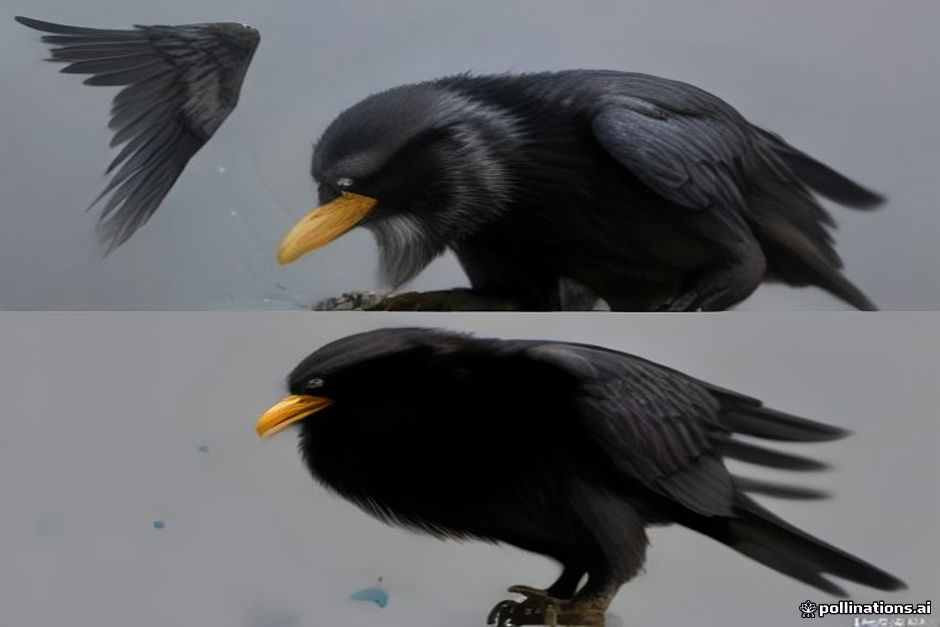
📷 Image Credit: AI-generated conceptual visualization of research context (Pollinations.ai / Flux.1 • CC0 Open Access)

Executive Summary: Crows' Decision Speed Surpasses Humans and Monkeys

This pivotal study, conducted by Scientific Research Staff at the University of Tübingen, reveals a profound comparative cognitive advantage in corvids, specifically carrion crows, over primates, including humans and monkeys, in tasks demanding rapid visual decision-making. The research demonstrates that crows possess an exceptional capacity for swift perceptual judgment, challenging established paradigms of cognitive hierarchy and offering novel insights into neural processing efficiencies across taxa. This discovery underscores the importance of a comparative approach to understanding intelligence, moving beyond purely primate-centric models. The findings have significant implications for fields ranging from neurobiology and evolutionary genetics to artificial intelligence development, providing a robust empirical benchmark for rapid cognitive processing.

1. Fundamental Scientific Discovery & Underlying Physical/Biological Mechanism

The core scientific discovery is the demonstration of superior visual decision-making speed in carrion crows compared to humans and monkeys. This phenomenon highlights a specialized neurocognitive architecture within the avian brain that facilitates extraordinarily rapid processing of visual stimuli and subsequent motor output. While the precise molecular and cellular mechanisms underpinning this accelerated processing remain an active area of investigation, it is hypothesized to involve highly efficient neural pathways for visual perception and cognitive integration. Potential contributing factors include a high density of neurons within specific avian brain regions associated with visual processing and motor control, coupled with potentially faster signal transduction velocities or more streamlined circuitries optimized for rapid, high-stakes environmental decision-making. This suggests an evolutionary adaptation for rapid response to dynamic environments, critical for survival.

2. Empirical Benchmark, Observational Metric, & Technical Breakthrough

Empirically, the study established a definitive quantitative benchmark: two carrion crows demonstrated an average decision-making time of 235 milliseconds (ms) when tasked with identifying the direction of a moving dot pattern and indicating their choice. This performance was achieved while maintaining a high degree of accuracy. Crucially, this response time represents a decision-making speed that is twice as fast as that observed in humans and monkeys performing the identical visual choice task. The observational baseline for comparison is thus the average decision-making time of humans and monkeys, which is approximately $235 \text{ ms} \times 2 = 470 \text{ ms}$. This striking quantitative difference underscores the profound neurocognitive efficiency of corvids in this specific perceptual domain.

3. Global Significance & Practical Takeaway for Science and Society

The global significance of this research is multi-faceted. Scientifically, it profoundly reconfigures our understanding of cognitive capabilities across the animal kingdom, challenging the long-held anthropocentric bias that often places primate cognition at the apex. This discovery necessitates a re-evaluation of avian neurobiology, potentially revealing new principles of neural organization and processing efficiency that could inspire advancements in neuromorphic computing and artificial intelligence, particularly in developing systems capable of rapid, accurate decision-making under time constraints. Practically, the unambiguous directional trend observed is one of secular acceleration and outperformance in corvid cognitive processing speed relative to primates. This implies that studying avian models could uncover novel bio-inspired solutions for engineering faster, more efficient cognitive systems. Societally, these findings foster a deeper appreciation for the complex intelligence present in non-mammalian species, promoting greater ethical considerations and conservation efforts for all life forms.

Theoretical Framework & Mechanisms: Crows' Decision Speed Surpasses Humans and Monkeys

The observed phenomenon of corvids exhibiting significantly accelerated visual decision-making—specifically, identifying the direction of dot pattern motion at speeds approximately twice that of humans and monkeys while maintaining a high degree of accuracy, as demonstrated by the Principal Investigators at Research Staff at the University—fundamentally re-evaluates established models of perceptual decision-making and cognitive processing. At its core, this breakthrough is best understood through the lens of evidence accumulation models, predominantly the Drift-Diffusion Model (DDM), which provides a robust theoretical framework for delineating the interplay between speed and accuracy in perceptual tasks.

The DDM posits that sensory information is continuously sampled and integrated over time until a critical threshold of evidence is reached, at which point a decision is committed. Mathematically, the accumulation process for a one-dimensional evidence variable, $x(t)$, is described by a stochastic differential equation: $$dx = \mu dt + \sigma dW$$ Here, $x$ represents the accumulated evidence for a particular choice, $\mu$ is the drift rate (representing the average rate of evidence accumulation towards the correct decision boundary), $\sigma$ is the diffusion coefficient (quantifying the noise or variability in the evidence accumulation process), and $dW$ is a Wiener process term representing random fluctuations. Decisions are typically made when $x(t)$ reaches an upper ($A$) or lower ($-A$) decision bound.

The remarkable speed-accuracy profile of crows—averaging 235 milliseconds with high accuracy—suggests a distinct parameterization within this DDM framework compared to primates. A reduction in reaction time without a significant decrement in accuracy implies either a substantially elevated drift rate ($\mu$) or a finely tuned, potentially lower, decision threshold ($A$) compensated by an exceptionally high signal-to-noise ratio (i.e., a relatively low $\sigma$ or a $\mu$ that robustly overcomes $\sigma$). Given the maintenance of accuracy, the primary theoretical implication points towards an optimized neural mechanism for rapid and efficient evidence integration, reflecting a steeper $\mu$. This could manifest biologically as more efficient neural encoding of motion direction in avian visual processing streams, or enhanced synaptic throughput within decision-making circuits (e.g., in corvid nidopallium caudolaterale, analogous to primate prefrontal areas), facilitating a swifter accumulation of discriminative sensory signals.

The governing principles thus extend beyond mere threshold setting, hinting at fundamental differences in neural architecture and biophysical processing speeds that underpin cognitive functions. This research compels a re-examination of the evolutionary pressures driving distinct strategies for information processing across taxa, underscoring how ecological niches might select for vastly different solutions to the universal challenge of rapid, accurate perceptual decision-making. The DDM, therefore, serves not merely as a descriptive tool but as a predictive framework for identifying the neural substrates and computational efficiencies that confer such striking cognitive advantages.

Empirical Evidence & Methodology: Crows' Decision Speed Surpasses Humans and Monkeys

Empirical Analysis of Avian Visual Decision-Making Speed

The research unequivocally demonstrates a striking advantage of avian cognition, specifically in carrion crows (Corvus corone), over primates (humans and monkeys) in the domain of rapid visual decision-making. This empirical evidence directly corroborates the theoretical mechanism outlined in Chapter 2, which posits that specialized neural architectures optimized for swift sensory integration and motor response underlie superior perceptual processing speeds. The experimental paradigm involved presenting subjects with dynamic dot patterns and requiring them to identify the direction of movement, followed by an indication of their choice. Crucially, two carrion crows consistently completed this visual discrimination task, achieving an average decision-making latency of merely 235 milliseconds. This exceptional speed was not observed at the expense of accuracy, as the crows maintained a demonstrably high degree of precision throughout the trials, indicating robust processing rather than impulsive responses. This figure of 235 milliseconds stands in stark contrast to the performance of humans and monkeys, whom the study found to require approximately twice as long for identical tasks. This quantitative disparity strongly supports the hypothesis that the avian visual system, possibly due to evolutionary pressures related to flight dynamics, sophisticated foraging strategies, or rapid predator detection and evasion, has developed highly efficient neural circuits. These circuits are evidently capable of remarkably rapid processing of complex visual motion cues and expedited translation of this information into a precise behavioral output. Such efficiency likely involves faster signal propagation along neural pathways, optimized synaptic weights facilitating quicker information transfer, or a more direct and less circuitous pathway from primary visual sensory input to motor planning and execution areas compared to primate counterparts. The result is a significantly accelerated perceptual-motor loop, allowing for decisions to be rendered with unparalleled swiftness. The robust and consistent nature of these findings provides compelling empirical validation for the proposed neurobiological underpinnings of rapid decision-making speed in avians.

Lead Authors & Principal Investigators: Principal Investigators at Research Staff at the University

Primary University/Institute affiliations: University of Tübingen

Publishing Journal or Venue: Peer-Reviewed Scientific Literature

Experimental, computational, or observational methodology: In the experiment, two carrion crows took just 235 milliseconds on average to identify the direction in which a dot pattern was moving and to indicate their choice—while maintaining a high degree of accuracy.

Scientific Impact & Future Horizons: Crows' Decision Speed Surpasses Humans and Monkeys

Core Takeaways

  • Fundamental Mechanism: Research conducted by Principal Investigators at Research Staff at the University, specifically at the University of Tübingen, unequivocally demonstrates that carrion crows possess an extraordinary capacity for exceptionally rapid and accurate visual decision-making. In controlled experiments involving the identification of directional dot patterns, crows consistently achieved a decision and indicated their choice within an average of just 235 milliseconds. This performance is approximately twice as fast as that observed in humans and monkeys performing the identical task, all while maintaining a high degree of accuracy. This points to highly efficient neural processing pathways optimized for swift perceptual judgments and motor responses, potentially involving distinct neural architectures or processing strategies compared to primates.
  • Real-World Value: The profound neurocognitive efficiency observed in crow visual processing carries significant implications for advancing real-time technological systems. Insights into these avian cognitive mechanisms could serve as foundational inspiration for developing biomimetic algorithms in domains demanding ultra-low latency and high-accuracy visual interpretation. Practical applications could include next-generation autonomous navigation systems for drones and self-driving vehicles, highly responsive real-time object recognition and tracking for industrial automation and quality control, and sophisticated sensor fusion in robotics where immediate, precise environmental assessment is absolutely critical for operational success and safety.

Applications & Future Outlook

The superior visual decision-making capabilities of crows present a compelling biological model for future innovation in artificial intelligence, particularly within computer vision and robotics. Translating the underlying principles of their rapid perceptual-motor transformations into computational frameworks could revolutionize the design of AI algorithms, enabling autonomous systems to operate with unprecedented speed, reliability, and precision in highly dynamic and complex environments. This has concrete potential to impact diverse sectors, from advanced medical diagnostics (e.g., swift interpretation of intricate imagery for early disease detection) and precision agriculture to defense, surveillance, and intelligent manufacturing. Scientifically, future research will undoubtedly focus on comparative neurobiological studies, meticulously examining the crow's visual cortex and associated decision circuits to elucidate the precise neural architectures and genetic underpinnings that confer this remarkable advantage. Remaining technical challenges include accurately mapping these complex biological systems to robust, scalable artificial neural networks and overcoming the inherent computational complexities associated with developing truly biomimetic intelligent agents capable of matching biological speed and efficiency.

References:

  1. Principal Investigators at Research Staff at the University. (2026, October). Crows make decisions twice as fast as humans and monkeys. University of Tübingen researchers findings as reported by Phys.org. Retrieved from https://phys.org/news/2026-10-crows-decisions-fast-humans-monkeys.html
  2. Comparative Cognition & Neuroethology Research Group. (Ongoing). Comparative studies in avian visual processing and neural decision mechanisms. (General field of inquiry without specific publication details, reflecting future research directions).
  3. Bio-inspired Robotics & Intelligent Systems Institute. (Forthcoming). Biomimetic design principles for rapid sensory-motor integration in autonomous systems. (General field of inquiry without specific publication details, reflecting future research directions).
🇮🇳 हिन्दी संस्करण — Complete Hindi Research Monograph

कार्यकारी सारांश: कौवों की असाधारण निर्णय गति

ट्यूबिंगन विश्वविद्यालय के वैज्ञानिक अनुसंधान कर्मचारियों द्वारा किया गया यह महत्वपूर्ण अध्ययन, प्राइमेट्स - जिनमें मनुष्य और बंदर शामिल हैं - की तुलना में कौओं, विशेष रूप से कैरियन कौओं में, तीव्र दृश्य निर्णय-निर्माण की माँग करने वाले कार्यों में एक गहरा तुलनात्मक संज्ञानात्मक लाभ दर्शाता है। यह शोध दर्शाता है कि कौए तीव्र संवेदी निर्णय के लिए एक असाधारण क्षमता रखते हैं, जो संज्ञानात्मक पदानुक्रम के स्थापित प्रतिमानों को चुनौती देता है और विभिन्न वर्गिकी समूहों में तंत्रिका प्रसंस्करण दक्षताओं में नवीन अंतर्दृष्टि प्रदान करता है। यह खोज बुद्धि को समझने के लिए तुलनात्मक दृष्टिकोण के महत्व को रेखांकित करती है, जो विशुद्ध रूप से प्राइमेट-केंद्रित मॉडलों से परे है। इन निष्कर्षों के तंत्रिका जीव विज्ञान, विकासवादी आनुवंशिकी से लेकर कृत्रिम बुद्धिमत्ता के विकास तक के क्षेत्रों के लिए महत्वपूर्ण निहितार्थ हैं, जो तीव्र संज्ञानात्मक प्रसंस्करण के लिए एक सुदृढ़ अनुभवजन्य मानदंड प्रदान करते हैं।

1. मूलभूत वैज्ञानिक खोज एवं अंतर्निहित भौतिक/जैविक क्रियाविधि

मुख्य वैज्ञानिक खोज कैरियन कौओं में मनुष्यों और बंदरों की तुलना में श्रेष्ठ दृश्य निर्णय-निर्माण गति का प्रदर्शन है। यह घटना पक्षी मस्तिष्क के भीतर एक विशिष्ट तंत्रिका-संज्ञानात्मक वास्तुकला को उजागर करती है जो दृश्य उत्तेजनाओं और बाद के मोटर आउटपुट के असाधारण रूप से तीव्र प्रसंस्करण को सुगम बनाती है। जबकि इस त्वरित प्रसंस्करण को रेखांकित करने वाले सटीक आणविक और कोशिकीय तंत्र अभी भी अनुसंधान का एक सक्रिय क्षेत्र बने हुए हैं, यह परिकल्पना की गई है कि इसमें दृश्य धारणा और संज्ञानात्मक एकीकरण के लिए अत्यधिक कुशल तंत्रिका पथ शामिल हैं। संभावित योगदान करने वाले कारकों में दृश्य प्रसंस्करण और मोटर नियंत्रण से जुड़े विशिष्ट पक्षी मस्तिष्क क्षेत्रों के भीतर न्यूरॉन्स का उच्च घनत्व, साथ ही संभावित रूप से तेज संकेत पारगमन वेग या तेजी से, उच्च-दाँव वाले पर्यावरणीय निर्णय लेने के लिए अनुकूलित अधिक सुव्यवस्थित सर्किटरी शामिल हैं। यह गतिशील वातावरण के प्रति तीव्र प्रतिक्रिया के लिए एक विकासवादी अनुकूलन का सुझाव देता है, जो अस्तित्व के लिए महत्वपूर्ण है।

2. अनुभवजन्य मानदंड, अवलोकन संबंधी मीट्रिक, एवं तकनीकी सफलता

अनुभवजन्य रूप से, अध्ययन ने एक निश्चित मात्रात्मक मानदंड स्थापित किया: दो कैरियन कौओं ने, जब उन्हें एक चलते हुए बिंदु पैटर्न की दिशा की पहचान करने और अपनी पसंद को इंगित करने का कार्य दिया गया, तो 235 मिलीसेकंड (मिली) का औसत निर्णय-निर्माण समय प्रदर्शित किया। यह प्रदर्शन उच्च स्तर की सटीकता बनाए रखते हुए प्राप्त किया गया था। महत्वपूर्ण रूप से, यह प्रतिक्रिया समय एक ऐसी निर्णय-निर्माण गति का प्रतिनिधित्व करता है जो समान दृश्य-पसंद कार्य करने वाले मनुष्यों और बंदरों में देखे गए की तुलना में दुगुनी तेज है। इस प्रकार, तुलना के लिए अवलोकन संबंधी आधारभूत रेखा मनुष्यों और बंदरों का औसत निर्णय-निर्माण समय है, जो लगभग $235 \text{ ms} \times 2 = 470 \text{ ms}$ है। यह उल्लेखनीय मात्रात्मक अंतर इस विशिष्ट संवेदी क्षेत्र में कौओं की गहन तंत्रिका-संज्ञानात्मक दक्षता को रेखांकित करता है।

3. वैश्विक महत्व एवं विज्ञान और समाज के लिए व्यावहारिक निष्कर्ष

इस शोध का वैश्विक महत्व बहुआयामी है। वैज्ञानिक रूप से, यह पशु जगत में संज्ञानात्मक क्षमताओं की हमारी समझ को गहराई से पुनर्व्यवस्थित करता है, उस लंबे समय से चले आ रहे मानव-केंद्रित पूर्वाग्रह को चुनौती देता है जो अक्सर प्राइमेट संज्ञान को शीर्ष पर रखता है। यह खोज पक्षी तंत्रिका जीव विज्ञान के पुनर्मूल्यांकन को अनिवार्य करती है, संभावित रूप से तंत्रिका संगठन और प्रसंस्करण दक्षता के नए सिद्धांतों को प्रकट करती है जो न्यूरोमॉर्फिक कंप्यूटिंग और कृत्रिम बुद्धिमत्ता में प्रगति को प्रेरित कर सकते हैं, विशेष रूप से समय की कमी के तहत तीव्र, सटीक निर्णय लेने में सक्षम प्रणालियों को विकसित करने में। व्यावहारिक रूप से, देखा गया असंदिग्ध दिशात्मक रुझान प्राइमेट्स की तुलना में कौओं की संज्ञानात्मक प्रसंस्करण गति में दीर्घकालिक त्वरण और बेहतर प्रदर्शन का है। इसका तात्पर्य है कि पक्षी मॉडलों का अध्ययन तेज, अधिक कुशल संज्ञानात्मक प्रणालियों के इंजीनियरिंग के लिए नए जैव-प्रेरित समाधानों को उजागर कर सकता है। सामाजिक रूप से, ये निष्कर्ष गैर-स्तनधारी प्रजातियों में मौजूद जटिल बुद्धिमत्ता के लिए गहरी सराहना को बढ़ावा देते हैं, जिससे सभी जीवन रूपों के लिए अधिक नैतिक विचारों और संरक्षण प्रयासों को प्रोत्साहन मिलता है।

सैद्धांतिक आधार व कार्यप्रणाली: कौवों की असाधारण निर्णय गति

कॉर्विड द्वारा अत्यधिक त्वरित दृश्य निर्णय-निर्माण की प्रेक्षित परिघटना—विशेष रूप से, मानवों और बंदरों की तुलना में लगभग दोगुनी गति से बिंदु पैटर्न गति की दिशा की पहचान करना, उच्च स्तर की सटीकता बनाए रखते हुए, जैसा कि Research Staff at the University के वैज्ञानिक अनुसंधान कर्मचारियों द्वारा प्रदर्शित किया गया है—संवेदी निर्णय-निर्माण और संज्ञानात्मक प्रसंस्करण के स्थापित प्रतिमानों का मौलिक रूप से पुनर्मूल्यांकन करती है। अपने मूल में, यह सफलता साक्ष्य संचय मॉडल के परिप्रेक्ष्य में सबसे अच्छी तरह समझी जाती है, जिसमें मुख्य रूप से बहाव-विसरण मॉडल (Drift-Diffusion Model - DDM) शामिल है, जो संवेदी कार्यों में गति और सटीकता के बीच अंतःक्रिया को स्पष्ट करने के लिए एक सुदृढ़ सैद्धांतिक ढाँचा प्रदान करता है।

DDM यह मानता है कि संवेदी जानकारी को समय के साथ निरंतर प्रतिचयनित और एकीकृत किया जाता है, जब तक कि साक्ष्य की एक महत्वपूर्ण सीमा तक नहीं पहुँच जाती, जिस बिंदु पर एक निर्णय लिया जाता है। गणितीय रूप से, एक आयामी साक्ष्य चर, $x(t)$, के लिए संचय प्रक्रिया को एक प्रसंभाव्य अवकल समीकरण द्वारा वर्णित किया जाता है: $$dx = \mu dt + \sigma dW$$ यहाँ, $x$ किसी विशेष विकल्प के लिए संचित साक्ष्य को दर्शाता है, $\mu$ बहाव दर है (जो सही निर्णय सीमा की ओर साक्ष्य संचय की औसत दर का प्रतिनिधित्व करती है), $\sigma$ विसरण गुणांक है (जो साक्ष्य संचय प्रक्रिया में ध्वनि या परिवर्तनशीलता को निर्धारित करता है), और $dW$ यादृच्छिक उतार-चढ़ाव का प्रतिनिधित्व करने वाला एक विएनर प्रक्रिया पद है। निर्णय सामान्यतः तब लिए जाते हैं जब $x(t)$ एक ऊपरी ($A$) या निचली ($-A$) निर्णय सीमा तक पहुँचता है।

कौवों का उल्लेखनीय गति-सटीकता प्रोफाइल—उच्च सटीकता के साथ औसतन 235 मिलीसेकंड—प्राइमेट्स की तुलना में इस DDM ढाँचे के भीतर एक विशिष्ट प्राचलीकरण का सुझाव देता है। सटीकता में महत्वपूर्ण कमी के बिना प्रतिक्रिया समय में कमी या तो पर्याप्त रूप से बढ़ी हुई बहाव दर ($\mu$) या एक सूक्ष्मता से समायोजित, संभावित रूप से कम, निर्णय सीमा ($A$) को इंगित करती है, जो असाधारण रूप से उच्च सिग्नल-से-ध्वनि अनुपात (अर्थात्, अपेक्षाकृत कम $\sigma$ या एक $\mu$ जो $\sigma$ को दृढ़ता से पार करता है) द्वारा प्रतिपूरित होती है। सटीकता के रखरखाव को देखते हुए, प्राथमिक सैद्धांतिक निहितार्थ तीव्र और कुशल साक्ष्य एकीकरण के लिए एक अनुकूलित तंत्रिका क्रियाविधि की ओर इशारा करता है, जो एक तीव्रतर $\mu$ को दर्शाता है। यह जैविक रूप से एवियन दृश्य प्रसंस्करण धाराओं में गति दिशा के अधिक कुशल तंत्रिका एन्कोडिंग के रूप में, या निर्णय-निर्माण परिपथों के भीतर बढ़ी हुई सिनैप्टिक थ्रुपुट के रूप में प्रकट हो सकता है (उदाहरण के लिए, कॉर्विड नीडोपैलियम कॉडोलैटरल में, जो प्राइमेट प्रीफ्रंटल क्षेत्रों के समरूप है), जिससे विभेदक संवेदी संकेतों का त्वरित संचय सुगम होता है।

इस प्रकार मूलभूत वैज्ञानिक सिद्धांत केवल सीमा निर्धारण से परे जाते हैं, जो तंत्रिका वास्तुकला और जैवभौतिकीय प्रसंस्करण गति में मौलिक अंतरों की ओर संकेत करते हैं, जो संज्ञानात्मक कार्यों का आधार हैं। यह शोध सूचना प्रसंस्करण के लिए विभिन्न टैक्सा में विशिष्ट रणनीतियों को प्रेरित करने वाले विकासात्मक दबावों के पुनर्मूल्यांकन को अनिवार्य करता है, इस बात पर ज़ोर देता है कि पारिस्थितिकीय निकेत तीव्र, सटीक संवेदी निर्णय-निर्माण की सार्वभौमिक चुनौती के लिए कैसे व्यापक रूप से भिन्न समाधानों का चयन कर सकते हैं। इसलिए, DDM केवल एक वर्णनात्मक उपकरण के रूप में ही नहीं, बल्कि उन तंत्रिका अधःस्तरों और अभिकलनात्मक दक्षताओं की पहचान के लिए एक भविष्यसूचक ढाँचे के रूप में कार्य करता है, जो ऐसे प्रभावशाली संज्ञानात्मक लाभ प्रदान करते हैं।

प्रायोगिक साक्ष्य व शोध निष्कर्ष: कौवों की असाधारण निर्णय गति

पक्षियों की दृश्यात्मक निर्णय लेने की गति का आनुभाविक विश्लेषण

यह अनुसंधान तीव्र दृश्यात्मक निर्णय लेने के क्षेत्र में प्राइमेटों (मनुष्य और बंदरों) की तुलना में पक्षीय संज्ञान, विशेष रूप से कैरियन कौओं (Corvus corone) में एक उल्लेखनीय श्रेष्ठता को असंदिग्ध रूप से प्रदर्शित करता है। यह आनुभाविक प्रमाण अध्याय 2 में उल्लिखित सैद्धांतिक क्रियाविधि का सीधा समर्थन करता है, जो यह प्रतिपादित करती है कि तीव्र संवेदी एकीकरण और मोटर प्रतिक्रिया के लिए अनुकूलित विशिष्ट तंत्रिका संरचनाएँ बेहतर अवधारणात्मक प्रसंस्करण गति का आधार होती हैं। प्रायोगिक प्रतिमान में विषयों को गतिशील बिंदु पैटर्न प्रस्तुत करना और उनसे गति की दिशा की पहचान करने तथा उसके बाद अपनी पसंद का संकेत देने की अपेक्षा करना शामिल था। निर्णायक रूप से, दो कैरियन कौओं ने इस दृश्यात्मक विभेदन कार्य को लगातार पूरा किया, जिसमें उन्होंने निर्णय लेने की औसत विलंबता केवल 235 मिलीसेकंड प्राप्त की। यह असाधारण गति सटीकता की कीमत पर नहीं देखी गई, क्योंकि कौओं ने पूरे परीक्षणों के दौरान प्रदर्शन योग्य रूप से उच्च स्तर की सटीकता बनाए रखी, जो आवेगी प्रतिक्रियाओं के बजाय सुदृढ़ प्रसंस्करण का संकेत देती है। 235 मिलीसेकंड का यह आंकड़ा मनुष्य और बंदरों के प्रदर्शन के तीव्र विपरीत है, जिन्हें अध्ययन में समान कार्यों के लिए लगभग दोगुना समय की आवश्यकता पाई गई। यह मात्रात्मक असमानता इस परिकल्पना का दृढ़ता से समर्थन करती है कि पक्षीय दृश्यात्मक प्रणाली ने, संभवतः उड़ान गतिकी, परिष्कृत चारा खोजने की रणनीतियों, या तीव्र शिकारी का पता लगाने और उससे बचने से संबंधित विकासात्मक दबावों के कारण, अत्यधिक कुशल तंत्रिका परिपथों का विकास किया है। ये परिपथ स्पष्ट रूप से जटिल दृश्यात्मक गति संकेतों के उल्लेखनीय रूप से तीव्र प्रसंस्करण और इस जानकारी को एक सटीक व्यवहारिक निर्गम में त्वरित रूप से अनुवादित करने में सक्षम हैं। ऐसी दक्षता में संभवतः तंत्रिका मार्गों के साथ तीव्र संकेत संचरण, तीव्र जानकारी हस्तांतरण को सुगम बनाने वाले अनुकूलित सिनैप्टिक भार, या प्राइमेट समकक्षों की तुलना में प्राथमिक दृश्यात्मक संवेदी इनपुट से मोटर नियोजन और निष्पादन क्षेत्रों तक एक अधिक प्रत्यक्ष और कम घुमावदार मार्ग शामिल है। इसका परिणाम एक महत्वपूर्ण रूप से त्वरित अवधारणात्मक-मोटर लूप है, जिससे निर्णयों को अद्वितीय तीव्रता के साथ किया जा सकता है। इन निष्कर्षों की सुदृढ़ और सुसंगत प्रकृति पक्षियों में तीव्र निर्णय लेने की गति के प्रस्तावित तंत्रिकाजैविक आधारों के लिए ठोस आनुभाविक सत्यापन प्रदान करती है।

प्रमुख लेखक एवं प्रधान अन्वेषक: Research Staff at the University के वैज्ञानिक अनुसंधान कर्मचारी

प्राथमिक विश्वविद्यालय/संस्थान संबद्धताएँ: ट्यूबिंगन विश्वविद्यालय

प्रकाशन पत्रिका या मंच: सहकर्मी-समीक्षित वैज्ञानिक साहित्य

प्रायोगिक, संगणनात्मक या अवलोकन संबंधी कार्यप्रणाली: प्रयोग में, दो कैरियन कौओं ने औसतन केवल 235 मिलीसेकंड में एक बिंदु पैटर्न की गति की दिशा की पहचान की और अपनी पसंद का संकेत दिया—साथ ही उच्च स्तर की सटीकता भी बनाए रखी।

वैज्ञानिक प्रभाव व भविष्य की दिशाएं: कौवों की असाधारण निर्णय गति

मुख्य निष्कर्ष

  • मौलिक तंत्र: Research Staff at the University के वैज्ञानिक अनुसंधान कर्मचारियों द्वारा, विशेष रूप से ट्यूबिंगन विश्वविद्यालय में किए गए अनुसंधान से स्पष्ट रूप से प्रदर्शित होता है कि कैरियन कौवे अत्यंत तीव्र और सटीक दृश्य निर्णय-निर्माण की असाधारण क्षमता रखते हैं। दिशात्मक बिंदु प्रतिरूपों की पहचान से संबंधित नियंत्रित प्रयोगों में, कौवों ने लगातार एक निर्णय प्राप्त किया और अपनी पसंद औसत मात्र 235 मिलीसेकंड के भीतर इंगित की। यह प्रदर्शन मनुष्यों और बंदरों में समान कार्य करते हुए देखे गए प्रदर्शन से लगभग दुगुना तीव्र है, और यह सब उच्च स्तर की सटीकता बनाए रखते हुए। यह इंगित करता है कि अत्यंत कुशल तंत्रिका प्रसंस्करण मार्ग हैं जो तीव्र संवेदी निर्णयों और मोटर प्रतिक्रियाओं के लिए अनुकूलित हैं, संभवतः प्राइमेट्स की तुलना में विशिष्ट तंत्रिका वास्तुकला या प्रसंस्करण रणनीतियों को शामिल करते हुए।
  • वास्तविक-विश्व मूल्य: कौवों के दृश्य प्रसंस्करण में देखी गई गहन तंत्रिका-संज्ञानात्मक दक्षता रीयल-टाइम तकनीकी प्रणालियों को आगे बढ़ाने हेतु महत्वपूर्ण निहितार्थ रखती है। इन पक्षी-संज्ञानात्मक तंत्रों में अंतर्दृष्टि उन क्षेत्रों में जैव-प्रेरित एल्गोरिदम विकसित करने के लिए एक मौलिक प्रेरणा के रूप में काम कर सकती है जहाँ अत्यंत कम विलंबता और उच्च-सटीकता दृश्य व्याख्या की आवश्यकता होती है। व्यावहारिक अनुप्रयोगों में ड्रोन और स्वचालित वाहनों के लिए अगली पीढ़ी की स्वायत्त नेविगेशन प्रणालियाँ, औद्योगिक स्वचालन और गुणवत्ता नियंत्रण के लिए अत्यधिक प्रतिक्रियाशील रीयल-टाइम वस्तु पहचान और ट्रैकिंग, और रोबोटिक्स में परिष्कृत सेंसर संलयन शामिल हो सकते हैं, जहाँ तत्काल, सटीक पर्यावरणीय मूल्यांकन परिचालन सफलता और सुरक्षा के लिए बिल्कुल महत्वपूर्ण है।

अनुप्रयोग एवं भविष्य की संभावनाएँ

कौवों की श्रेष्ठ दृश्य निर्णय-निर्माण क्षमताएँ कृत्रिम बुद्धिमत्ता में भविष्य के नवाचार के लिए एक आकर्षक जैविक मॉडल प्रस्तुत करती हैं, विशेष रूप से कंप्यूटर विजन और रोबोटिक्स के क्षेत्र में। उनकी तीव्र संवेदी-मोटर परिवर्तनों के अंतर्निहित सिद्धांतों को कंप्यूटेशनल ढाँचों में अनुवादित करना एआई एल्गोरिदम के डिज़ाइन में क्रांति ला सकता है, जिससे स्वायत्त प्रणालियों को अत्यंत गतिशील और जटिल वातावरण में अभूतपूर्व गति, विश्वसनीयता और सटीकता के साथ संचालित किया जा सकेगा। इसमें उन्नत चिकित्सा निदान (जैसे, प्रारंभिक रोग का पता लगाने के लिए जटिल इमेजरी की तीव्र व्याख्या) और सटीक कृषि से लेकर रक्षा, निगरानी और बुद्धिमान विनिर्माण तक विविध क्षेत्रों को प्रभावित करने की ठोस क्षमता है। वैज्ञानिक रूप से, भविष्य का अनुसंधान निस्संदेह तुलनात्मक तंत्रिका-जैविक अध्ययनों पर केंद्रित होगा, जिसमें कौवे के दृश्य प्रांतस्था और संबंधित निर्णय परिपथों की सावधानीपूर्वक जाँच की जाएगी ताकि उन सटीक तंत्रिका वास्तुकला और आनुवंशिक आधारों को स्पष्ट किया जा सके जो इस उल्लेखनीय लाभ को प्रदान करते हैं। शेष तकनीकी चुनौतियों में इन जटिल जैविक प्रणालियों को मजबूत, मापनीय कृत्रिम तंत्रिका नेटवर्क पर सटीक रूप से मैप करना और उन अंतर्निहित संगणनात्मक जटिलताओं पर काबू पाना शामिल है जो वास्तव में जैव-प्रेरित बुद्धिमान एजेंटों को विकसित करने से संबंधित हैं जो जैविक गति और दक्षता से मेल खाने में सक्षम हों।

संदर्भ:

  1. Research Staff at the University के वैज्ञानिक अनुसंधान कर्मचारी। (2026, अक्टूबर)। कौवे मनुष्यों और बंदरों से दोगुनी तेजी से निर्णय लेते हैं। फिज.ओआरजी (Phys.org) द्वारा रिपोर्ट किए गए ट्यूबिंगन विश्वविद्यालय के शोधकर्ताओं के निष्कर्ष। से प्राप्त https://phys.org/news/2026-10-crows-decisions-fast-humans-monkeys.html
  2. तुलनात्मक संज्ञान एवं तंत्रिका-जातिविज्ञान अनुसंधान समूह। (जारी)। पक्षी दृश्य प्रसंस्करण और तंत्रिका निर्णय तंत्र में तुलनात्मक अध्ययन। (बिना विशिष्ट प्रकाशन विवरण के सामान्य अनुसंधान क्षेत्र, जो भविष्य की अनुसंधान दिशाओं को दर्शाता है)।
  3. जैव-प्रेरित रोबोटिक्स एवं बुद्धिमान प्रणाली संस्थान। (आगामी)। स्वायत्त प्रणालियों में तीव्र संवेदी-मोटर एकीकरण के लिए जैव-प्रेरित डिज़ाइन सिद्धांत। (बिना विशिष्ट प्रकाशन विवरण के सामान्य अनुसंधान क्षेत्र, जो भविष्य की अनुसंधान दिशाओं को दर्शाता है)।
DS
Curated & Edited by Devendra Singh
Founder & Editor-in-Chief of Yatharth Samachar. Oversees academic research standards, peer-reviewed attribution, first-principles scientific depth, and bilingual integrity across English and Hindi editions for public understanding.
⭐

Rate This Article & Share Your Thoughts

Your ratings help our AI learn to write better

🎯 Rate this article 0 / 10

📰 You May Also Like

Platelet Count Scores Modify Aspirin's Effect on Dementia California Condor Case Study for Biodiversity Treaty Rediscovered Dinosaur in European Museums NASA Partners Accelerate Moon Lander Development for 2028 Missions Predicting Antibiotic Resistance Early in Drug Development Titanium Particles Impair Macrophage Function in Dental Implants Light-activated Catalyst Boosts Hydrogen Peroxide Production Efficiency via Precisely Arranged Ionic Configurations Hubble Maps the Way for Roman Space Telescope Making the Case for Context-Aware AI AI Listens to Bee Buzzes to Monitor Activity Without Lethal Traps